
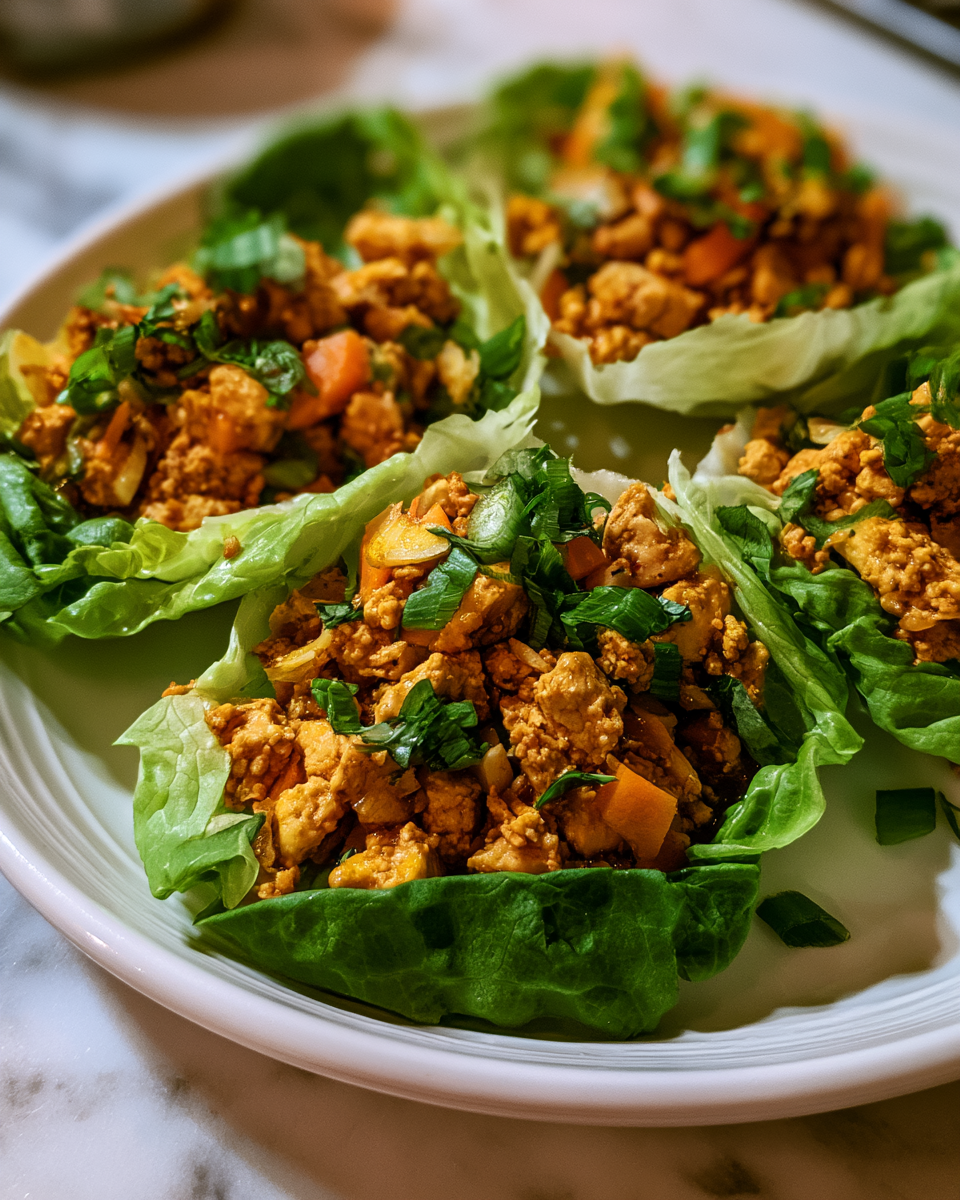
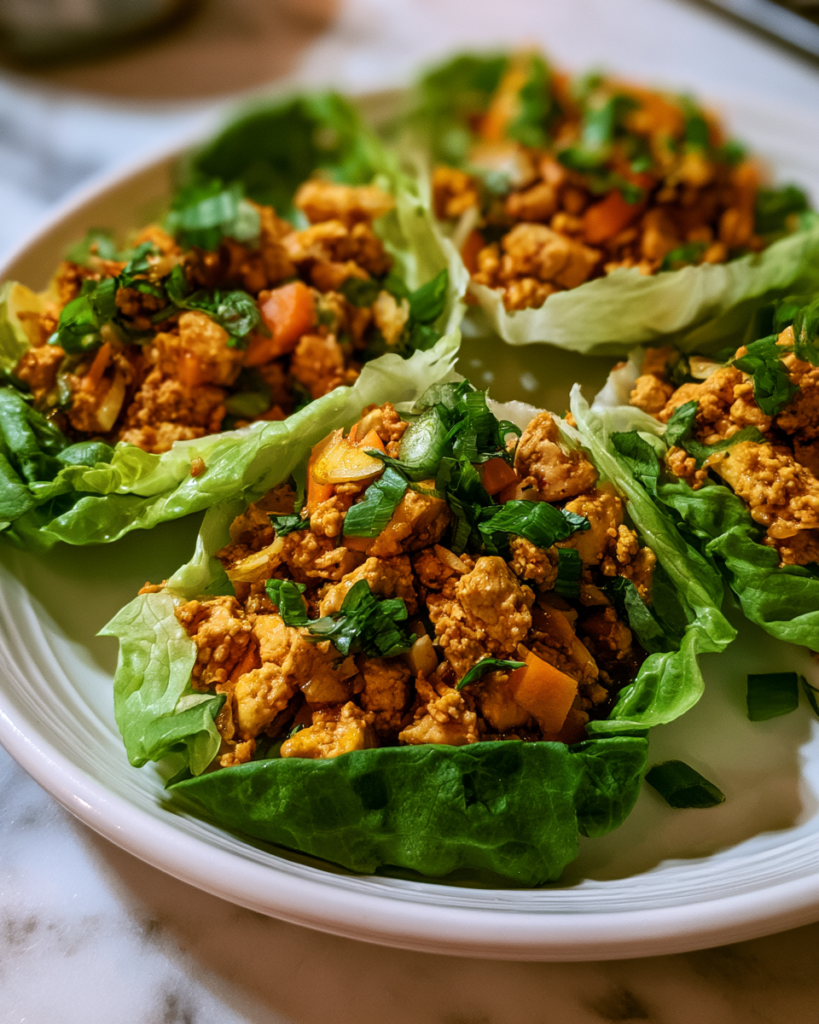
Ground Chicken Asian Lettuce Cups bring together savory ground chicken, crisp lettuce leaves, fresh aromatics, and a balanced sauce that coats every bite without feeling heavy. This dish is popular for busy evenings because it comes together quickly while still tasting layered and satisfying.
Each lettuce cup combines warm, seasoned filling with cool, crisp greens. The contrast in texture is part of what keeps this meal interesting from the first serving to the last. It works equally well for a casual family dinner, meal prep, or serving guests who enjoy lighter dishes with bold flavor.
Unlike heavier wraps or rice-based meals, these lettuce cups feel fresh while still being filling. Ground chicken cooks quickly and absorbs seasonings beautifully, allowing garlic, ginger, soy sauce, and sesame notes to stand out.
Ingredients Overview
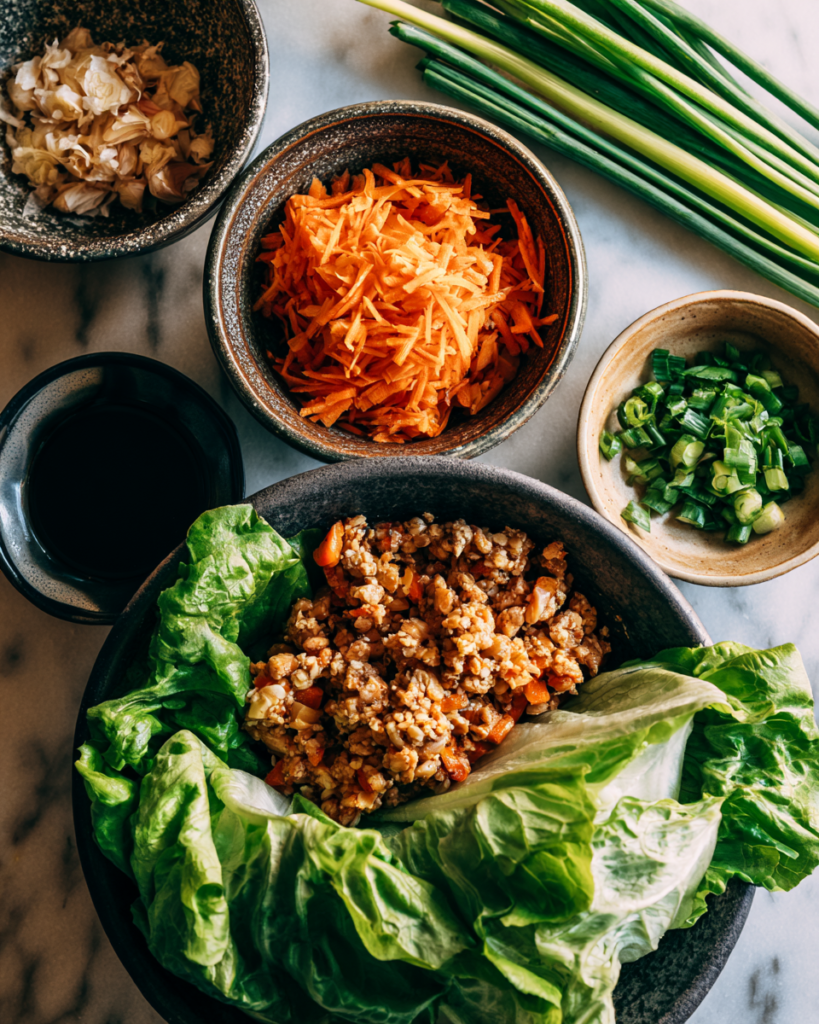
The foundation of Ground Chicken Asian Lettuce Cups is lean ground chicken. It cooks fast and develops a tender texture while soaking up the sauce. Dark meat ground chicken tends to stay juicier, though lean breast meat also works if cooked carefully.
Fresh garlic and ginger create the aromatic base. Garlic adds depth and savory warmth, while ginger contributes brightness and gentle spice. Together they give the filling its recognizable character.
Low-sodium soy sauce provides salt and rich umami. A small amount of hoisin sauce contributes sweetness and body, helping the filling cling to the chicken. Rice vinegar adds balance and keeps the flavors from becoming too heavy.
Water chestnuts are optional but highly recommended because they contribute crunch that contrasts with the soft chicken. Green onions add freshness and mild onion flavor.
Sesame oil is used sparingly because it has a strong roasted character. Just a small amount rounds out the dish.
Butter lettuce, Bibb lettuce, or romaine leaves create the cup shape. Butter lettuce is especially popular because the leaves bend easily and hold fillings well.
If needed, ground turkey can replace chicken with similar results. Coconut aminos may replace soy sauce for a slightly sweeter profile. Mushrooms can be added for extra texture and volume while keeping the dish balanced.
Ingredients
1 pound ground chicken
1 tablespoon neutral cooking oil
3 cloves garlic, minced
1 tablespoon fresh ginger, finely grated
1 small yellow onion, finely diced
1/4 cup low-sodium soy sauce
2 tablespoons hoisin sauce
1 tablespoon rice vinegar
1 teaspoon toasted sesame oil
1 teaspoon cornstarch
2 tablespoons water
1 cup finely chopped water chestnuts
3 green onions, thinly sliced
1/4 teaspoon black pepper
1 large head butter lettuce, leaves separated and washed
1 teaspoon sesame seeds
1 tablespoon chopped fresh cilantro
Step-by-Step Instructions
Begin by preparing all ingredients before heating the pan. Dice the onion, mince the garlic, grate the ginger, chop the water chestnuts, and separate the lettuce leaves. Pat the lettuce dry thoroughly so the cups stay crisp.
In a small bowl, whisk together soy sauce, hoisin sauce, rice vinegar, sesame oil, cornstarch, and water until smooth. Set aside.
Place a large skillet over medium-high heat and add the cooking oil. Once warm, add the diced onion and cook for about 3 minutes until softened but not deeply browned.
Add garlic and ginger. Stir continuously for about 30 seconds. Aromatics cook quickly and can become bitter if left too long.
Add ground chicken to the pan. Break it into small crumbles using a wooden spoon. Spread it across the surface so it browns evenly rather than steaming. Cook for 6 to 8 minutes until no pink remains.
Season with black pepper and stir in the chopped water chestnuts. Allow them to warm for about 1 minute.
Pour in the prepared sauce and stir continuously. The mixture should bubble gently and begin to thicken within 1 to 2 minutes. The chicken should look glossy and lightly coated rather than swimming in liquid.
Fold in most of the green onions, saving a small amount for garnish.
Taste and adjust if needed. If the mixture tastes too salty, add a splash of water. If it seems dry, add another spoonful of sauce or a teaspoon of water.
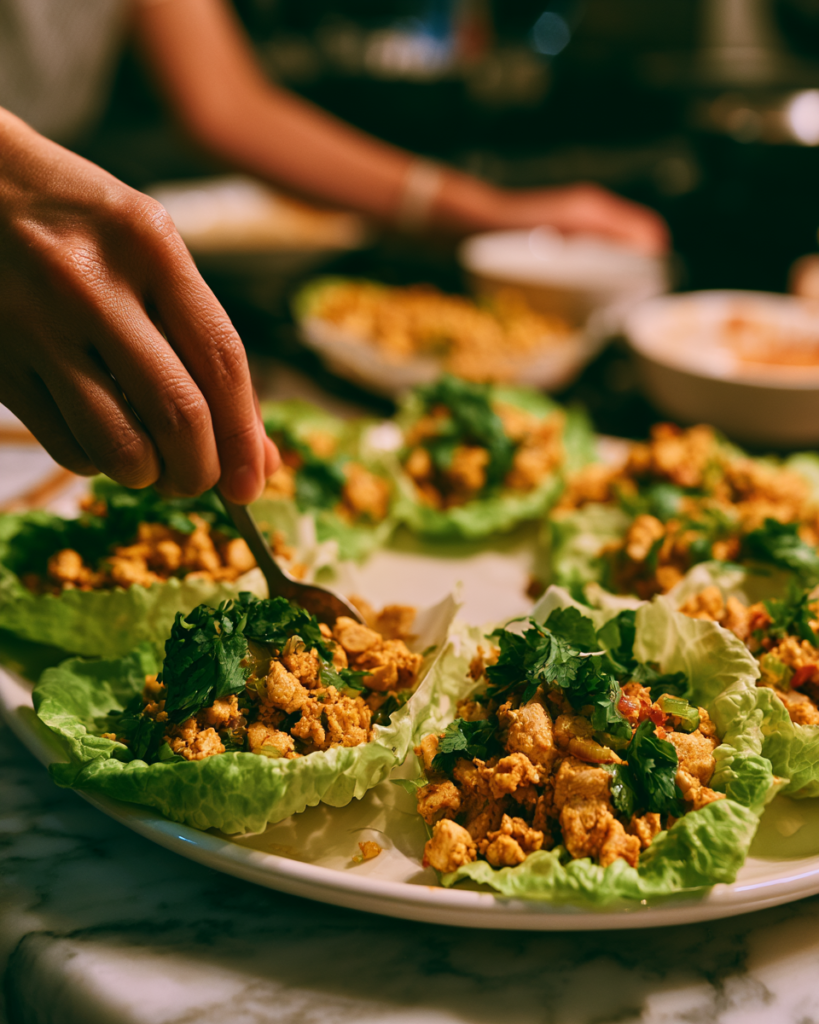
Arrange lettuce leaves on a serving plate. Spoon warm chicken filling into each leaf. Finish with sesame seeds, remaining green onions, and chopped cilantro.
Serve immediately while the filling is warm and the lettuce remains crisp.
A common mistake is overcrowding the skillet, which causes steaming instead of browning. Another is adding the sauce too early before the chicken has fully cooked.
Tips, Variations & Substitutions
For extra texture, finely diced mushrooms blend into the chicken while keeping the filling moist. Finely shredded carrots also work well.
If serving a crowd, keep the chicken mixture warm in a covered skillet and let everyone assemble their own cups at the table.
For additional heat, stir a small amount of chili garlic sauce into the filling. Keep the quantity modest so the other flavors remain balanced.
Ground turkey works as a direct substitute for chicken. Finely chopped tofu can replace part of the meat for a lighter variation.
Romaine lettuce creates firmer cups with more crunch, while butter lettuce gives a softer bite and wraps around the filling more easily.
To prepare ahead, cook the filling up to three days in advance and refrigerate separately from the lettuce. Reheat gently before serving.
Avoid overcooking lean chicken because it can dry out quickly. Pull the pan from the heat once the sauce lightly coats the meat.
A spoonful of chopped peanuts or cashews at serving adds another layer of texture.
Serving Ideas & Occasions
Ground Chicken Asian Lettuce Cups fit many occasions because they feel casual while still looking polished on the table.
For dinner, pair them with jasmine rice, steamed edamame, cucumber salad, or roasted broccoli. For a lighter plate, serve alongside a simple slaw dressed with rice vinegar and sesame.
These lettuce cups also work as a party appetizer. Arrange the lettuce separately from the filling and allow guests to build their own servings.
For lunch meal prep, pack the filling in one container and the lettuce in another to preserve freshness.
Cold sparkling water with citrus, unsweetened iced tea, or ginger-based drinks pair nicely with the savory flavors.
Because the recipe cooks quickly, it also fits weeknight schedules and informal gatherings.
Nutritional & Health Notes
Ground Chicken Asian Lettuce Cups provide protein while keeping the overall meal relatively light compared with many wrap or takeout options.
Chicken contributes protein that supports satiety. Lettuce adds freshness and volume with minimal heaviness. Water chestnuts contribute crunch while remaining mild in flavor.
Using low-sodium soy sauce helps control salt levels without sacrificing taste. Choosing lean ground chicken reduces overall fat, though slightly richer chicken blends often stay more tender.
The recipe naturally includes vegetables through onion, ginger, garlic, lettuce, and garnishes. Adding mushrooms or extra vegetables can increase fiber.
Serving the filling in lettuce instead of bread or tortillas changes the overall balance of the meal while keeping it satisfying.
Portion size and added toppings will influence final nutrition values.
FAQs
Can I prepare the filling ahead of time?
Yes. The filling stores well and often tastes even richer the next day after the flavors settle together. Allow the cooked mixture to cool before transferring it to an airtight container. Refrigerate for up to three days. Reheat in a skillet over medium heat with a splash of water if the sauce thickens too much. Keep the lettuce separate until serving because refrigerated lettuce can lose its crisp texture. Assemble only when ready to eat for the best contrast between warm filling and cool leaves.
Which lettuce works best for lettuce cups?
Butter lettuce is widely preferred because its leaves are soft, curved, and easy to fill. Bibb lettuce offers similar qualities. Romaine provides more crunch and structure but can crack if overfilled. Iceberg lettuce gives a crisp bite but is less flexible. Select leaves that are large enough to hold the filling comfortably. Washing and drying thoroughly helps maintain texture and prevents the sauce from sliding off during serving.
Can I freeze the chicken mixture?
The chicken filling freezes well, though the lettuce should always be prepared fresh. Allow the cooked filling to cool completely, then transfer it to freezer-safe containers. Freeze for up to two months. Thaw overnight in the refrigerator and reheat in a skillet. Add a splash of water if the sauce becomes too concentrated. Garnishes such as green onions and cilantro should be added after reheating.
How do I keep the filling from becoming watery?
Cook the chicken until excess moisture evaporates before adding the sauce. Avoid overcrowding the pan because crowded meat releases steam. The cornstarch in the sauce helps create a light coating that stays on the chicken. Water chestnuts should be drained well before adding. If the mixture still seems loose, simmer for another minute while stirring gently until the texture tightens.
Are these lettuce cups spicy?
This version is mild and focused on savory flavor rather than heat. Ginger contributes warmth but not significant spice. If you prefer a stronger kick, stir chili garlic sauce, crushed red pepper, or sliced fresh chilies into the filling. Add heat gradually because the sauce becomes more concentrated as it cooks. Keeping the base mild makes the recipe accessible for different preferences.
What can I serve instead of lettuce?
If lettuce is unavailable, serve the filling over steamed rice, cauliflower rice, rice noodles, or inside thin wraps. Cucumber boats also work for a crisp presentation. Another option is spooning the filling into halved bell peppers. The chicken mixture remains versatile and pairs with many bases while keeping its savory character.
Can I add more vegetables?
Yes. Finely chopped mushrooms, carrots, zucchini, cabbage, and bell peppers blend well into the filling. Add firmer vegetables earlier so they soften properly. Vegetables increase texture and stretch the recipe without changing the flavor profile too much. Keep the pieces small so they distribute evenly and remain easy to scoop into each lettuce leaf.