

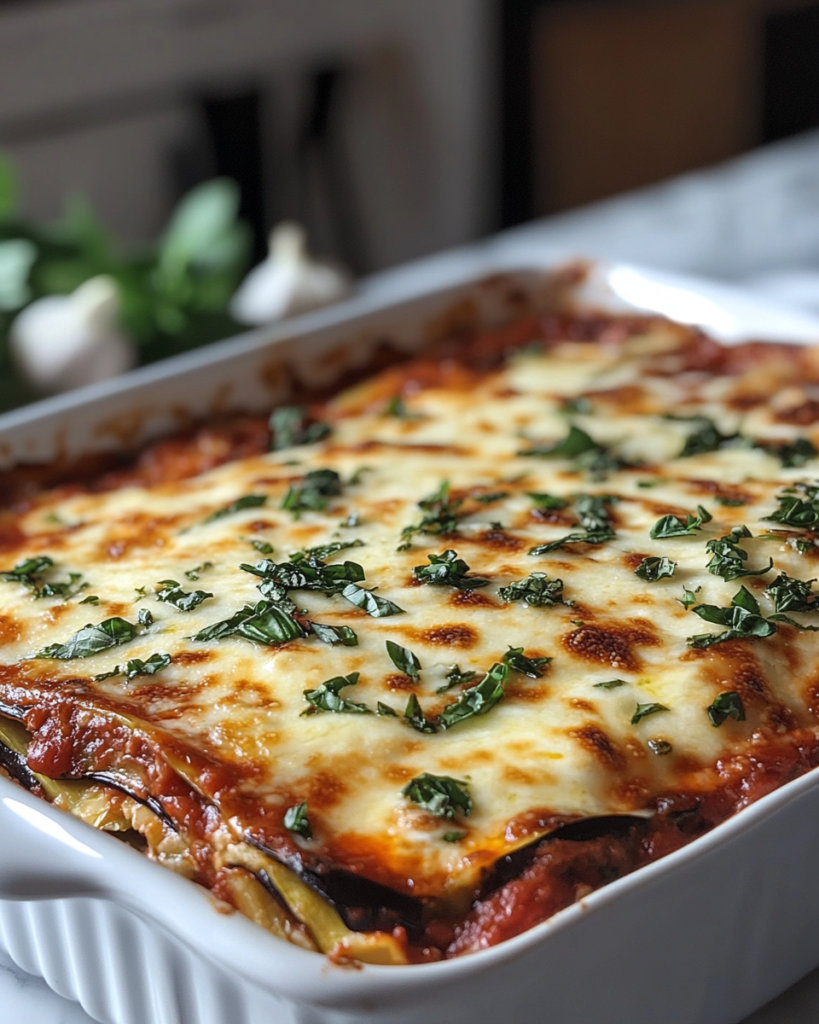
Eggplant Lasagna with Ricotta brings together tender roasted eggplant, rich tomato sauce, creamy ricotta, and bubbling cheese in a hearty baked dish that feels comforting and satisfying. Instead of traditional pasta sheets, slices of eggplant create layered structure while adding gentle sweetness and a soft, silky texture.
This version balances richness with freshness and creates a meal that feels substantial without becoming overly heavy. Careful roasting removes excess moisture from the eggplant so each layer stays distinct and sliceable.
Whether served for a family dinner, shared gathering, or prepared ahead for the week, this baked dish delivers familiar Italian-inspired flavors with a vegetable-forward approach.
Ingredients Overview
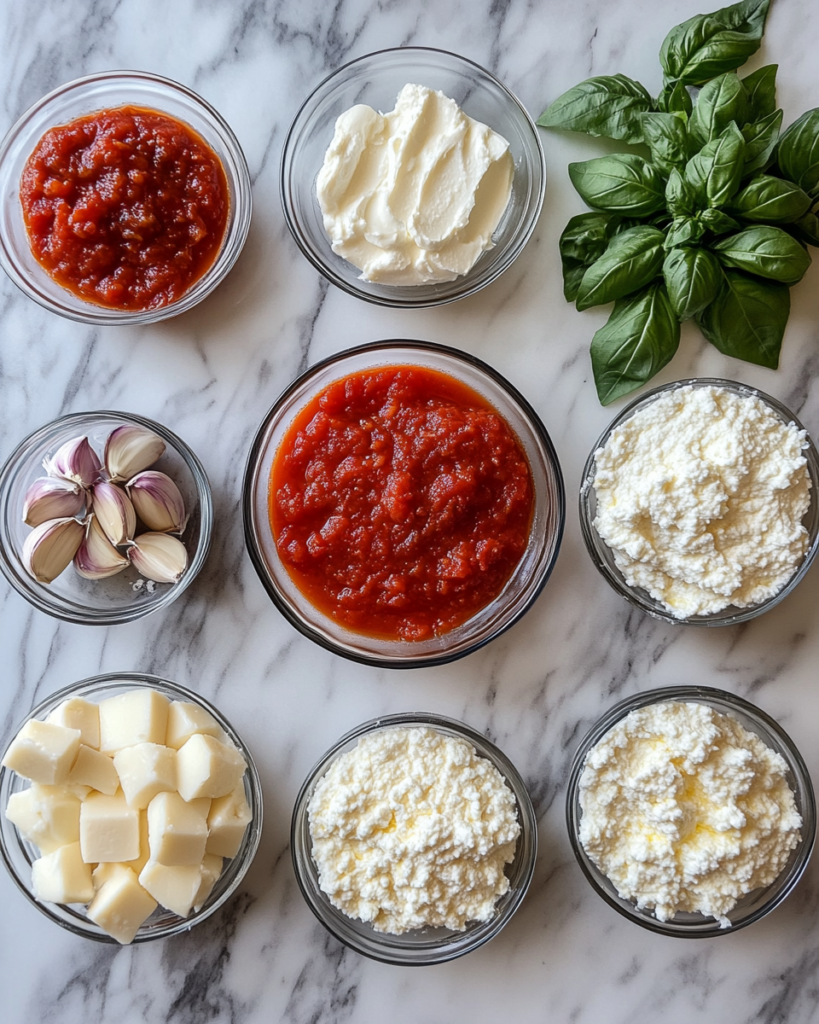
The foundation of Eggplant Lasagna with Ricotta begins with large globe eggplants. Their broad shape creates sturdy layers that soften beautifully during roasting. Salting and roasting the slices helps reduce excess liquid and concentrates their flavor.
Ricotta brings creamy texture and mild richness. Whole milk ricotta gives the smoothest result, although part-skim ricotta also works if a lighter texture is preferred. Mixing ricotta with egg and Parmesan creates a filling that stays stable during baking rather than becoming loose.
Tomato sauce ties the layers together. A simple marinara with garlic, onion, olive oil, and herbs creates balance against the creamy cheese. Jarred marinara is practical, though homemade sauce offers deeper flavor.
Mozzarella contributes stretch and a golden top. Low-moisture mozzarella is especially useful because it melts evenly and releases less liquid. Parmesan adds a salty, savory finish.
Fresh basil and parsley bring brightness and contrast to the baked richness. Dried oregano supports the sauce with earthy notes.
Small adjustments work well in this recipe. Cottage cheese may replace ricotta for a slightly lighter filling. Pecorino Romano can stand in for Parmesan if a sharper finish is preferred. For extra vegetables, thin zucchini slices can join the eggplant layers, though moisture should be reduced through roasting before assembly.
Ingredients
2 large eggplants, sliced lengthwise into 1/4-inch strips
2 teaspoons kosher salt
2 tablespoons olive oil
2 cups whole milk ricotta cheese
1 large egg
3/4 cup grated Parmesan cheese, divided
2 tablespoons chopped fresh parsley
4 cups marinara sauce
3 cups shredded low-moisture mozzarella cheese
1 tablespoon chopped fresh basil
1 teaspoon dried oregano
3 cloves garlic, minced
1 tablespoon olive oil
1/2 teaspoon black pepper
Step-by-Step Instructions
Preheat the oven to 425°F (220°C). Line two baking sheets with parchment.
Arrange the eggplant slices in a single layer and sprinkle lightly with the salt. Allow them to rest for about 20 minutes. Moisture will appear on the surface. Pat each slice dry using paper towels.
Brush both sides of the eggplant with olive oil and arrange in an even layer. Roast for 20–25 minutes, turning halfway through, until the slices soften and develop light golden edges. Avoid deep browning because overly roasted eggplant can become fragile.
Lower the oven temperature to 375°F (190°C).
While the eggplant roasts, prepare the cheese filling. In a bowl, combine ricotta, egg, 1/2 cup Parmesan, parsley, and black pepper. Stir until smooth.
Warm one tablespoon olive oil in a saucepan over medium heat. Add garlic and cook briefly until fragrant, about 30 seconds. Stir in marinara sauce, oregano, and basil. Simmer for 5 minutes so the flavors blend.
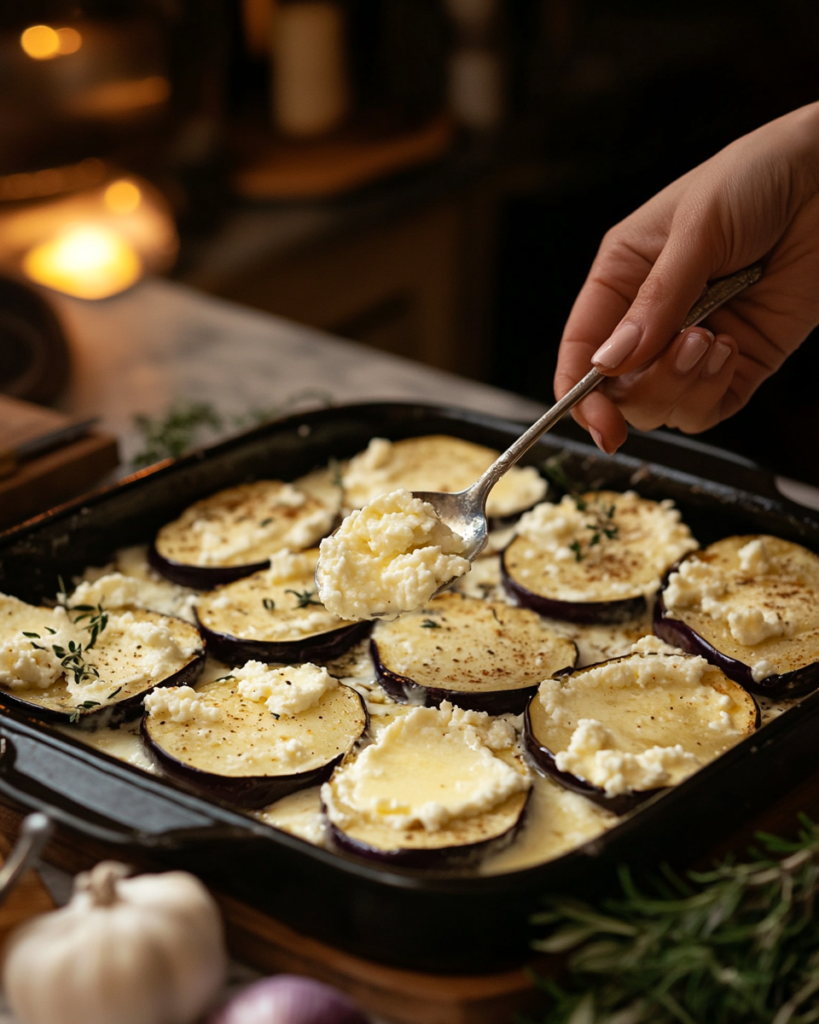
Lightly coat a 9×13-inch baking dish with sauce. Place a layer of roasted eggplant across the bottom. Spread a portion of the ricotta mixture over the eggplant. Spoon sauce across the surface, then scatter mozzarella.
Repeat the layering process: eggplant, ricotta mixture, sauce, mozzarella. Continue until all ingredients are used, finishing with sauce and the remaining mozzarella and Parmesan.
Cover loosely with foil and bake for 30 minutes.
Remove the foil and continue baking for 15–20 minutes until the cheese turns golden and the edges bubble gently.
Allow the lasagna to rest for at least 15 minutes before slicing. Resting helps the layers settle and prevents excess liquid on the plate.
Common problems usually come from moisture. Skipping the eggplant roasting step often creates a watery result. Overloading sauce can also soften the structure too much. Moderate layering creates cleaner portions.
Slices should hold their shape while remaining tender enough to cut easily with a fork.
Tips, Variations & Substitutions
For deeper flavor, roast the eggplant slightly longer until lightly caramelized along the edges while still flexible enough to layer.
Adding sautéed spinach between layers creates extra texture and earthy notes. Spinach should be cooked and squeezed dry before use.
Ground turkey or cooked Italian sausage can be added for a heartier variation. Spread thin layers rather than heavy portions so the dish stays balanced.
For a vegetarian version with additional vegetables, roasted zucchini or mushrooms pair naturally with the ricotta filling.
If dairy reduction is preferred, use part-skim ricotta and lower the mozzarella slightly. Plant-based cheese alternatives can work, though texture changes somewhat.
Fresh herbs provide a brighter finish than dried herbs added at the end. Scatter chopped basil after baking rather than baking all of it inside.
Eggplant thickness matters. Thin slices become fragile while very thick slices stay firm. About one-quarter inch creates reliable layers.
This dish stores well. Refrigerate tightly covered for up to four days. Reheat portions in the oven for better texture than microwave reheating.
Serving Ideas & Occasions
Eggplant Lasagna with Ricotta pairs naturally with crisp green salads dressed simply with olive oil and lemon. Garlic bread, toasted rustic bread, or roasted vegetables round out the meal without competing with the layered flavors.
For beverages, sparkling water with citrus, iced tea, or a medium-bodied red wine complement the richness.
This dish fits many occasions. It works beautifully for relaxed weekend dinners, shared family meals, casual gatherings, or meal preparation days.
Because it reheats well, leftovers often taste even richer after resting overnight. Smaller portions also serve nicely at lunch alongside a salad.
A tray of this lasagna placed at the center of the table creates an inviting meal that feels generous and comforting.
Nutritional & Health Notes
Eggplant Lasagna with Ricotta offers a balanced mix of vegetables, dairy, and moderate carbohydrates due to replacing traditional pasta sheets.
Eggplant contributes fiber and a naturally satisfying texture. Ricotta provides protein and calcium while mozzarella adds additional protein and richness.
Portion size affects overall balance since cheese contributes most of the calories. Serving alongside vegetables rather than extra starch keeps the meal lighter.
Roasting instead of frying the eggplant reduces added oil while preserving flavor.
Using quality tomato sauce also contributes acidity and depth without requiring large amounts of added fat.
This recipe suits those seeking a vegetable-centered baked meal while still enjoying classic lasagna flavors and textures.
FAQs
Can I prepare Eggplant Lasagna with Ricotta ahead of time?
Yes. Assemble the entire dish up to one day in advance and refrigerate covered before baking. Allow the baking dish to sit at room temperature for about 20 minutes before placing it into the oven. Since chilled layers begin cold, baking may require an additional 10–15 minutes. Another option is roasting the eggplant and mixing the cheese filling in advance, then assembling later. Resting overnight can even help the flavors blend further.
Do I need to peel the eggplant?
Peeling is optional. The skin softens during roasting and helps maintain structure between layers. Smaller eggplants usually have thinner skin and work especially well without peeling. If a softer texture is preferred, peel alternating strips instead of removing all of the skin. That approach preserves stability while reducing chewiness. The finished texture remains smooth and cohesive.
Why did my lasagna become watery?
Excess moisture usually comes from under-roasted eggplant, watery ricotta, or too much sauce. Salting and roasting the eggplant removes liquid before assembly. If ricotta appears very wet, drain it briefly in a fine mesh strainer. Low-moisture mozzarella also helps maintain cleaner slices. Resting after baking allows the layers to settle and absorb remaining moisture.
Can Eggplant Lasagna with Ricotta be frozen?
Yes. Bake and cool completely before wrapping tightly and freezing. Individual slices also freeze well for convenient portions. Thaw overnight in the refrigerator before reheating in the oven. Reheating from frozen is possible but requires additional covered baking time. Texture stays closest to fresh when frozen after baking rather than before.
Which sauce works well in this recipe?
Classic marinara is a reliable choice because its acidity balances the richness of ricotta and cheese. Tomato sauces containing garlic, onion, and herbs work particularly well. Thick sauces generally perform better than very loose sauces. If preparing sauce at home, simmer long enough to reduce excess water before layering.
Can I add pasta sheets with the eggplant?
Certainly. Some cooks combine thin pasta sheets with eggplant layers for a more traditional lasagna structure. If adding pasta, reduce sauce slightly to prevent excess moisture. Alternate sparingly so the eggplant remains noticeable. Fully cooked noodles are easier to manage in this style of assembly.
How should leftovers be reheated?
Oven reheating preserves the layered texture most effectively. Place portions in an oven-safe dish, cover loosely with foil, and warm at 350°F until heated through. A microwave works for convenience, though the edges soften more quickly. Allow reheated portions to stand briefly before serving so the layers stay intact.