
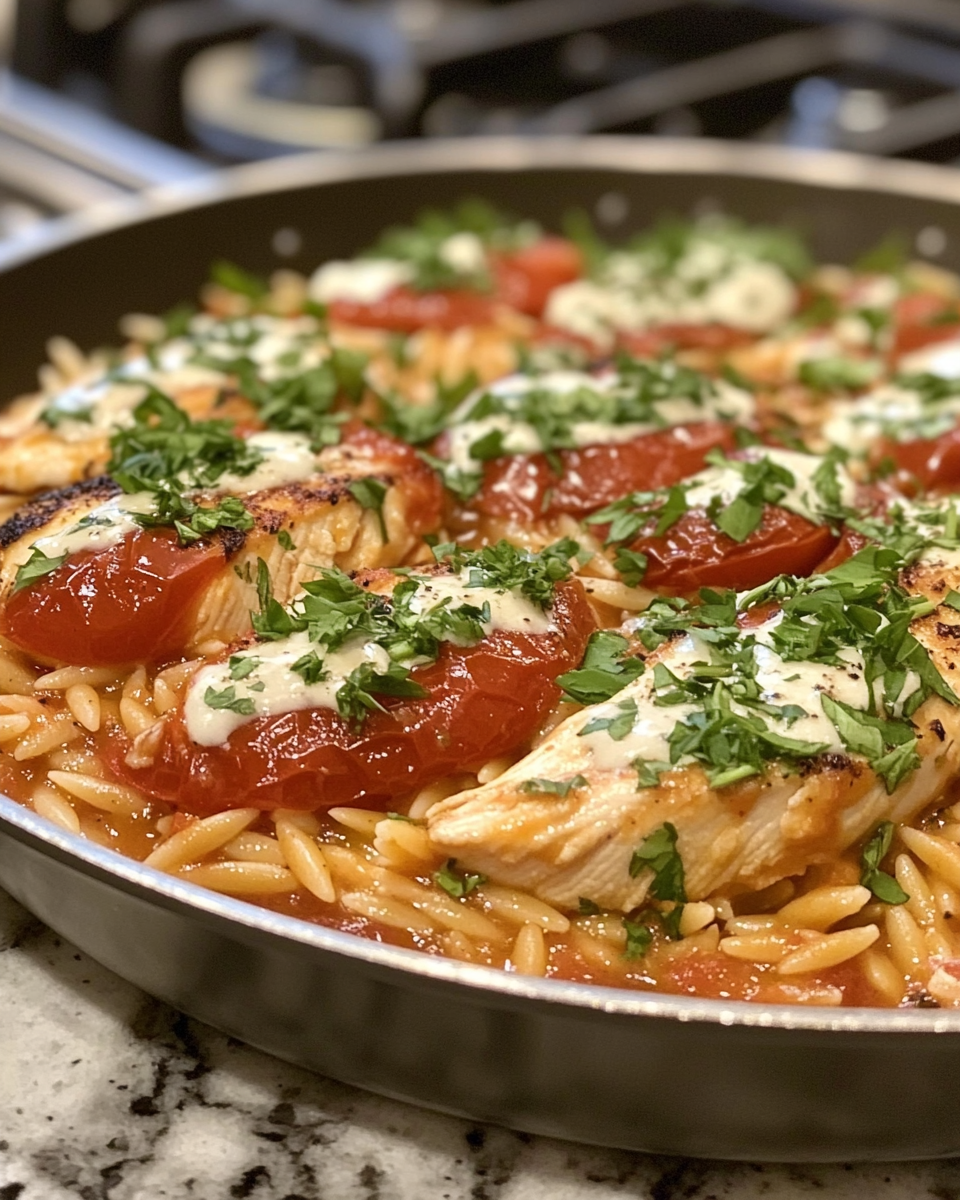
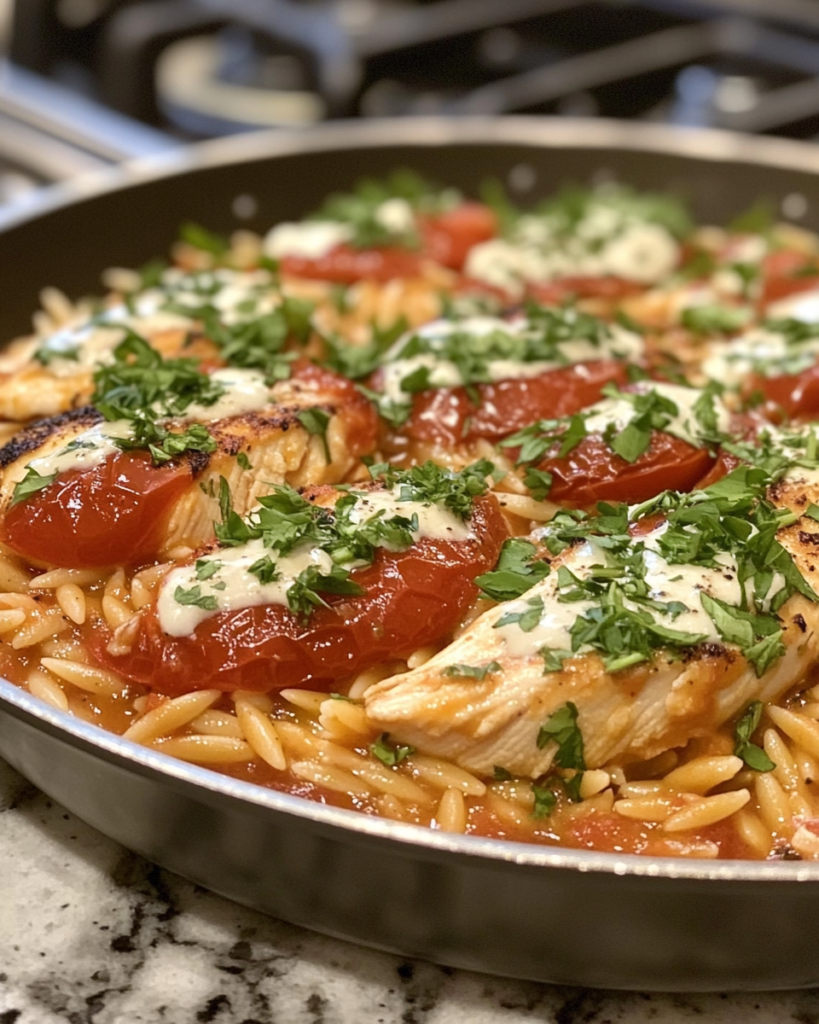
Creamy Tomato Chicken Orzo is the kind of meal that brings together the comfort of a pasta dish and the ease of a one-pan dinner. Tender bites of chicken, silky tomato cream sauce, and delicate orzo create a rich yet balanced meal that feels suitable for both busy evenings and relaxed family meals.
Unlike heavier cream-based pasta dishes, this recipe balances savory chicken with bright tomato flavor and the soft texture of orzo. The result is satisfying without feeling overly rich. Every spoonful carries a little sauce, making the dish feel smooth and comforting from start to finish.
This recipe works well throughout the year because the ingredients are easy to find and the method stays straightforward. It is equally suited for weeknight cooking or serving guests with minimal effort.
Ingredients Overview
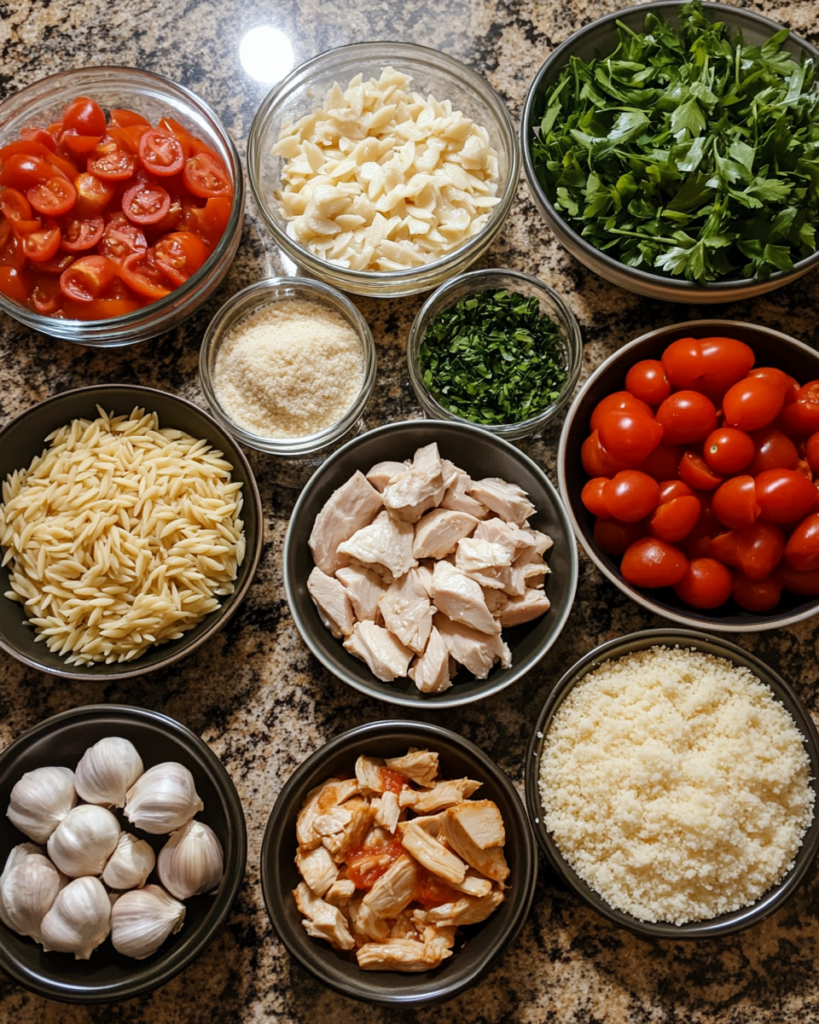
The foundation of Creamy Tomato Chicken Orzo starts with boneless skinless chicken breasts or thighs. Chicken breast creates a lighter dish with a firm texture, while thighs offer slightly richer flavor and remain tender after simmering.
Orzo plays an important role in the final texture. Although it resembles rice, orzo is pasta and absorbs flavor while releasing starch into the sauce. That natural starch helps create a creamy finish without relying entirely on dairy.
Tomatoes provide brightness and depth. Canned crushed tomatoes work particularly well because they break down smoothly into the sauce. Tomato paste adds concentrated flavor and gives the finished dish a deeper color and richer character.
Cream rounds out the acidity from the tomatoes and creates the silky texture that defines this meal. Heavy cream gives the richest finish, though half-and-half can be substituted for a lighter result.
Garlic and onion build savory notes and create the aromatic base. Italian seasoning, black pepper, and a touch of paprika bring warmth without overwhelming the tomatoes.
Chicken broth is another key ingredient because the orzo cooks directly in the liquid, absorbing flavor as it softens. Parmesan adds saltiness and a subtle nutty finish.
Fresh spinach can be stirred in during the final minutes for color and freshness. Basil or parsley also work well as finishing herbs.
Ingredients
1 pound boneless skinless chicken breast, cut into bite-size pieces
1 tablespoon olive oil
1 tablespoon butter
1 small yellow onion, finely diced
3 cloves garlic, minced
1 teaspoon Italian seasoning
1/2 teaspoon paprika
1 teaspoon kosher salt
1/2 teaspoon black pepper
2 tablespoons tomato paste
1 can (14 ounces) crushed tomatoes
3 cups chicken broth
1 cup dry orzo
3/4 cup heavy cream
1/2 cup grated Parmesan cheese
2 cups fresh spinach
2 tablespoons chopped fresh basil
Step-by-Step Instructions
Start by preparing all ingredients before turning on the stove. Dice the onion, mince the garlic, grate the Parmesan, and cut the chicken into even pieces so everything cooks at the same pace.
Heat a large deep skillet or Dutch oven over medium heat. Add olive oil and butter. Once melted, place the chicken pieces in a single layer. Season with half of the salt and pepper.
Cook the chicken for about 5 to 6 minutes, stirring occasionally, until lightly golden. The chicken does not need to cook fully at this stage because it will finish in the sauce later. Remove the chicken and place it on a plate.
Reduce the heat slightly and add the diced onion to the same pan. Cook for about 4 minutes until softened and lightly translucent. Stir in garlic, Italian seasoning, paprika, and the remaining salt and pepper. Cook for about 30 seconds.
Add tomato paste and stir continuously for 1 minute so it darkens slightly and develops richer flavor.
Pour in the crushed tomatoes and chicken broth. Stir well and scrape any browned bits from the bottom of the pan.
Bring the mixture to a gentle simmer and add the dry orzo. Stir frequently during the first few minutes because orzo can settle and stick.
Return the chicken and any collected juices to the pan.
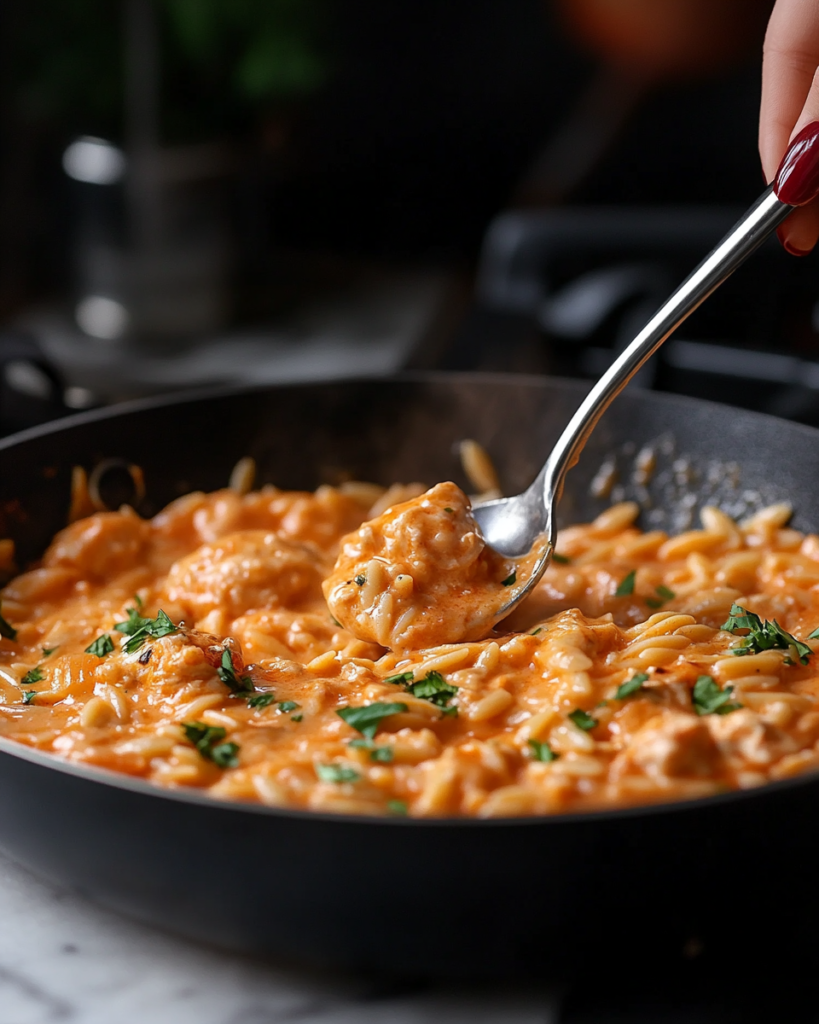
Cook uncovered over medium-low heat for approximately 10 to 12 minutes, stirring every few minutes. The orzo should soften and absorb some of the liquid while remaining slightly loose because the sauce thickens as it rests.
Lower the heat and pour in the cream. Stir slowly until fully combined.
Add Parmesan and continue stirring until melted into the sauce.
Fold in the spinach and cook for another 1 to 2 minutes until wilted.
Taste and adjust seasoning if needed.
If the sauce becomes thicker than preferred, stir in a splash of warm broth. If it appears thin, allow it to simmer for another minute or two.
Finish with fresh basil before serving.
A common mistake is cooking the orzo too aggressively. High heat can cause uneven texture and quick evaporation of liquid. Another frequent issue is adding cream while the sauce is boiling hard, which may lead to separation. Gentle heat creates the smoothest result.
Allow the dish to rest for several minutes before serving so the sauce settles around the pasta.
Tips, Variations & Substitutions
Chicken thighs can replace chicken breast for a richer texture. They stay especially tender during simmering.
For extra vegetables, stir in chopped zucchini, mushrooms, or diced bell peppers after cooking the onions. These additions blend naturally with the tomato base.
Half-and-half may replace heavy cream for a lighter finish, though the sauce will be slightly thinner. A spoonful of cream cheese can also add body.
For a dairy-free version, use unsweetened oat cream and skip the Parmesan or substitute a plant-based grated cheese.
Fresh cherry tomatoes can replace canned tomatoes during peak season. Cook them longer until softened and broken down.
If using pre-cooked chicken, reduce the simmering time and stir the chicken in near the end.
Add red pepper flakes for mild heat.
Store leftovers in an airtight container for up to three days. The orzo continues absorbing sauce during storage, so add a small splash of broth when reheating.
This dish also reheats gently over medium-low heat on the stovetop.
Serving Ideas & Occasions
Creamy Tomato Chicken Orzo pairs well with simple side dishes that balance its rich texture.
Serve it with warm garlic bread, toasted sourdough, or a crisp green salad dressed with lemon and olive oil. Roasted broccoli, green beans, or asparagus also pair nicely.
For drinks, sparkling water with citrus, iced tea, or a light white wine complement the tomato and cream combination.
This recipe fits casual family dinners, meal preparation days, weekend gatherings, and small dinner parties. Because everything cooks in one pan, cleanup stays manageable while still creating a dish that feels complete and satisfying.
Serve in shallow bowls with extra Parmesan and fresh herbs for a polished presentation.
Nutritional & Health Notes
Creamy Tomato Chicken Orzo offers a balanced combination of protein, carbohydrates, and fats.
Chicken contributes protein that supports fullness and creates the hearty character of the meal. Tomatoes provide natural acidity and contain nutrients commonly associated with vegetables used in everyday cooking.
Orzo supplies energy through carbohydrates and creates the satisfying texture of the dish.
The cream and Parmesan contribute richness and help create a silky sauce. Portion size can be adjusted depending on individual preferences and meal goals.
Adding spinach increases vegetable content while contributing color and freshness.
For a lighter version, reduce the cream slightly and increase broth. Using chicken breast and adding more vegetables can also shift the balance toward a lighter meal while maintaining the same overall character.
FAQs
Can I cook this recipe ahead of time?
Yes. Creamy Tomato Chicken Orzo works well as a prepare-ahead meal. Cook the dish completely, cool it slightly, and refrigerate in a covered container. Since orzo absorbs liquid over time, the texture becomes thicker after chilling. Reheat gently on the stove with a splash of broth or milk until the sauce loosens again. Avoid reheating over high heat because the cream sauce may become grainy. Fresh herbs should be added after reheating rather than before storage.
Can I freeze Creamy Tomato Chicken Orzo?
Freezing is possible, though the texture changes slightly. Orzo tends to soften after thawing and cream sauces can separate. If freezing, cool the dish fully and transfer it to airtight containers. Freeze for up to two months. Thaw overnight in the refrigerator and warm slowly with extra broth while stirring frequently. Fresh herbs and Parmesan are best added after reheating for fresher flavor.
Which type of chicken works best?
Both chicken breast and chicken thighs work well. Chicken breast creates a leaner dish and keeps the tomato flavor more prominent. Chicken thighs bring richer flavor and remain very tender after simmering. Whichever cut you choose, keep pieces similar in size so they cook evenly and finish at the same point.
Can I substitute another pasta for orzo?
Small pasta shapes such as ditalini or small shells can work, though cooking times and liquid amounts may change. Orzo creates the smoothest texture because it cooks quickly and blends into the sauce naturally. Larger pasta shapes require additional liquid and can alter the balance of the dish.
Why did my sauce become too thick?
Orzo absorbs liquid rapidly. If the dish sits too long or cooks at a stronger simmer than intended, the sauce thickens quickly. Add warm broth gradually and stir until the desired consistency returns. Serving shortly after cooking also helps maintain the ideal creamy texture.
Is spinach required?
Spinach is optional. It adds freshness and color without changing the overall flavor significantly. Kale, chopped baby kale, or finely sliced Swiss chard can also work. If skipping greens entirely, the dish still remains rich and balanced.
Can I prepare this in one pot?
Yes, and that is one of its strengths. Browning the chicken, building the sauce, and cooking the orzo in the same pan allows flavor to develop naturally. A deep skillet or Dutch oven works especially well because it gives enough room for stirring and helps the orzo cook evenly.