
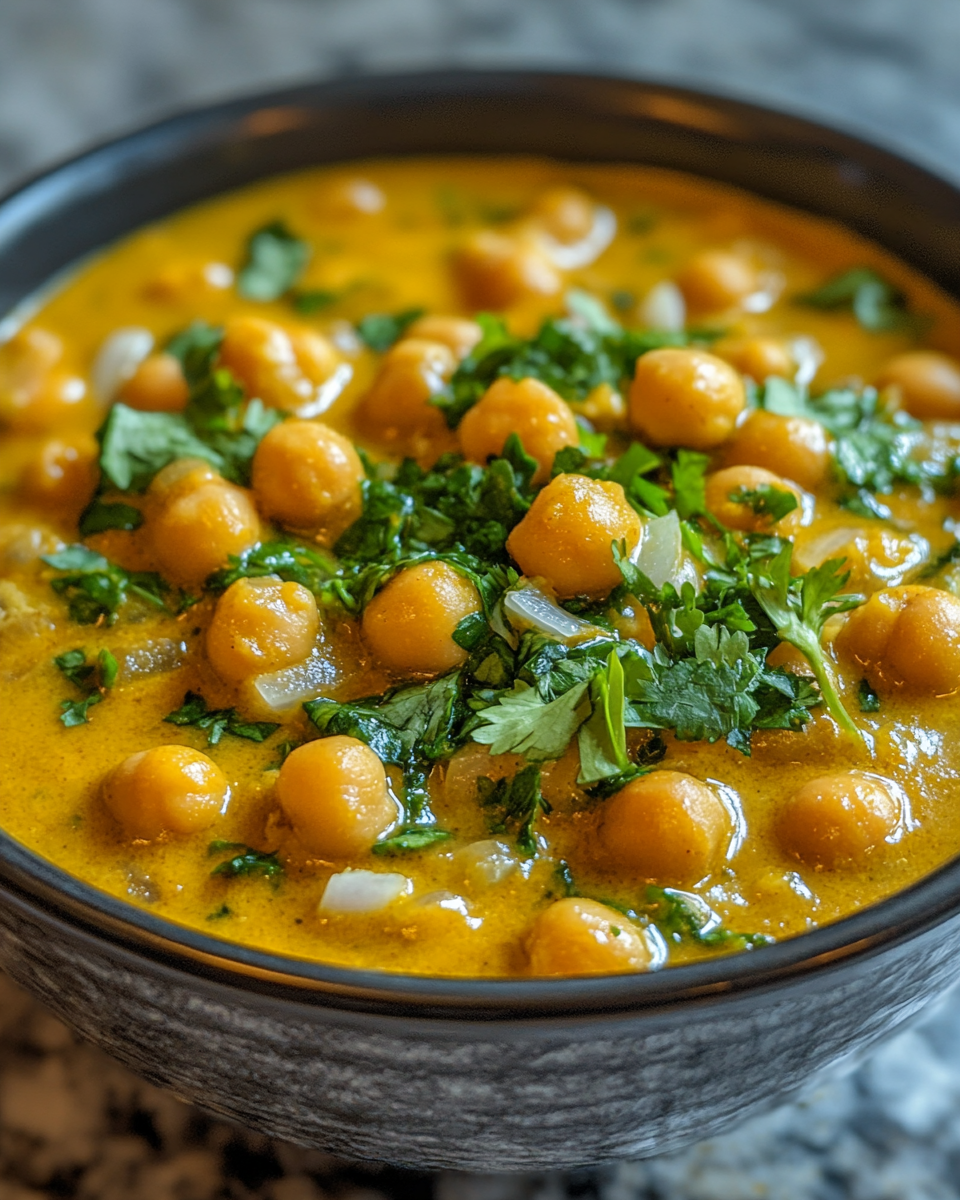
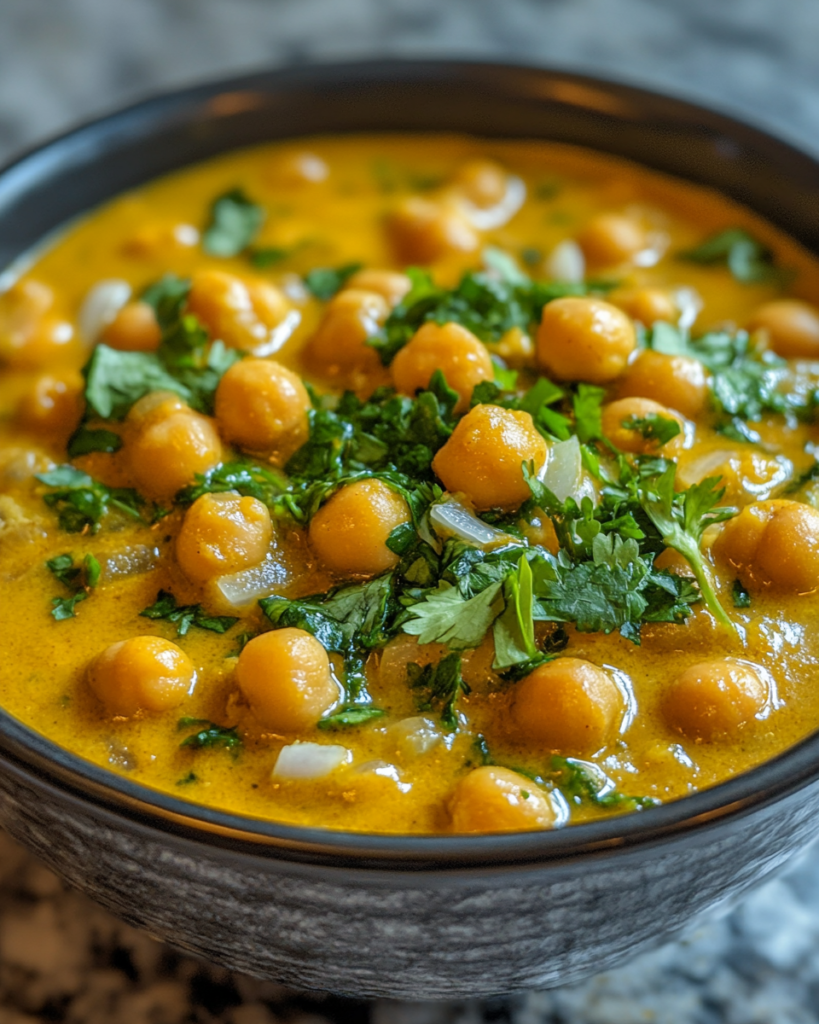
Chickpea Coconut Curry is a comforting plant-based dish built around creamy coconut milk, tender chickpeas, warming spices, and a rich tomato base. This curry delivers deep flavor with pantry staples and comes together in a single pot, making it suitable for weeknight dinners as well as relaxed gatherings.
The balance between earthy legumes and silky coconut creates a satisfying texture that feels hearty without becoming heavy. Gentle spices add warmth rather than intense heat, while fresh aromatics bring brightness to every spoonful.
This dish pairs beautifully with rice, flatbread, or grains and adapts easily to different tastes. Whether prepared for a family meal or batch cooking for later in the week, Chickpea Coconut Curry offers comfort and flexibility in every serving.
Ingredients Overview

Every ingredient in Chickpea Coconut Curry contributes to a layered result that tastes slowly cooked even though the process is straightforward.
Chickpeas form the foundation of the dish. Their creamy interior absorbs surrounding flavors while adding plant-based protein and satisfying texture. Canned chickpeas keep preparation simple, though cooked dried chickpeas also work well if prepared in advance.
Coconut milk creates the signature richness. Full-fat coconut milk gives a velvety finish and balances the spices. Light coconut milk can be used for a lighter texture, though the sauce becomes slightly thinner.
Onion, garlic, and fresh ginger build the aromatic base. Cooking these ingredients gently at the beginning allows their natural sweetness and fragrance to develop before spices are added.
Tomatoes bring acidity and depth that balance the coconut. Crushed tomatoes blend smoothly into the sauce and create a fuller body.
The spice blend usually includes curry powder, cumin, turmeric, coriander, and a modest amount of chili. Together they create warmth, earthy notes, subtle sweetness, and color.
Vegetable broth loosens the sauce and helps the flavors blend while simmering. A squeeze of lime at the end brightens the entire dish.
Fresh spinach is optional but highly recommended because it softens quickly and introduces color and freshness. Cilantro or parsley adds a final fresh layer before serving.
Ingredients
2 tablespoons coconut oil
1 medium yellow onion, finely diced
4 cloves garlic, minced
1 tablespoon fresh ginger, grated
1 tablespoon curry powder
1 teaspoon ground cumin
1 teaspoon ground coriander
1/2 teaspoon turmeric
1/4 teaspoon red chili flakes
1 tablespoon tomato paste
1 can (14 ounces) crushed tomatoes
2 cans (15 ounces each) chickpeas, drained and rinsed
1 can (13.5 ounces) full-fat coconut milk
1 cup vegetable broth
3 cups fresh spinach
1 teaspoon salt
1/2 teaspoon black pepper
1 tablespoon fresh lime juice
2 tablespoons chopped cilantro
Cooked basmati rice, for serving
Warm naan, optional
Step-by-Step Instructions

Begin by preparing all ingredients before heating the pot. Dice the onion evenly, mince the garlic, grate the ginger, rinse the chickpeas thoroughly, and measure the spices. Having everything ready keeps the cooking process smooth.
Place a large deep skillet or Dutch oven over medium heat. Add the coconut oil and allow it to warm for about 30 seconds. Add the onion and cook for 6–8 minutes, stirring occasionally until softened and lightly golden. Avoid rushing this stage because properly cooked onion forms much of the flavor foundation.
Add garlic and ginger. Stir continuously for about one minute until fragrant. Do not let the garlic darken because burnt garlic can create bitterness.
Add curry powder, cumin, coriander, turmeric, and chili flakes directly into the pan. Stir for 30–45 seconds to toast the spices lightly. This helps release aroma and deepens the flavor.
Mix in the tomato paste and cook for another minute. Pour in the crushed tomatoes and stir until smooth.
Add chickpeas, coconut milk, vegetable broth, salt, and black pepper. Stir well and increase the heat until the mixture reaches a gentle simmer.
Reduce to medium-low and cook uncovered for 18–22 minutes. Stir occasionally to prevent sticking and allow the sauce to thicken naturally. During this stage the chickpeas absorb seasoning and the coconut blends with the tomatoes.
If the curry becomes thicker than desired, add a splash of broth or water. If thinner than preferred, simmer a few extra minutes uncovered.
Add spinach during the final 2 minutes of cooking and stir until wilted. Remove from heat and stir in lime juice.
Taste and adjust seasoning if needed. Rest the curry for 5 minutes before serving. This short resting period helps the flavors settle.
Serve over hot basmati rice and finish with chopped cilantro.
Common issues are easy to avoid. Overheating coconut milk can separate the sauce, so maintain a gentle simmer. Underseasoning can flatten the flavor, so season gradually and taste near the end. Skipping the onion cooking stage may leave the curry tasting sharp rather than rounded.
Tips, Variations & Substitutions
For a richer texture, simmer the curry slightly longer before adding spinach. The sauce thickens naturally as moisture cooks away.
If using dried chickpeas, soak overnight and cook until fully tender before adding them to the curry. Undercooked chickpeas remain firm and absorb less flavor.
Vegetable additions work beautifully in this dish. Cubed sweet potato, cauliflower florets, peas, diced carrots, or zucchini can be added during simmering.
For additional protein, stir in baked tofu cubes or cooked lentils.
Those who prefer extra warmth can add finely chopped fresh chili or a pinch of cayenne. For milder flavor, reduce chili flakes and use mild curry powder.
If coconut is unavailable, a plain unsweetened oat cooking cream creates a different but still creamy result.
Fresh spinach may be replaced with kale. Add kale earlier because it takes longer to soften.
Rice is traditional, but quinoa, couscous, or warm flatbread work equally well.
Batch cooking is practical because the flavor often becomes deeper after refrigeration. Store cooled curry in an airtight container for up to four days.
Serving Ideas & Occasions
Chickpea Coconut Curry fits many occasions because it feels comforting while remaining simple to prepare.
Serve it with fluffy basmati rice for a classic combination. Jasmine rice, brown rice, or lightly seasoned quinoa also pair well.
Warm naan or roti adds texture and works nicely for scooping the sauce. A cucumber salad with yogurt and herbs balances the warmth of the spices.
For beverages, chilled sparkling water with lime, lightly brewed iced tea, or mango lassi-style drinks pair nicely.
This curry works well for casual dinners, meal preparation days, shared family meals, and vegetarian gatherings. Because it reheats smoothly, it is also practical for packed lunches.
Present the dish in wide bowls with extra herbs and lime wedges for a fresh finishing touch.
Nutritional & Health Notes
Chickpea Coconut Curry offers a balanced combination of carbohydrates, plant protein, fiber, and fats.
Chickpeas contribute protein and dietary fiber, which help create a filling meal. They also contain minerals such as iron and magnesium.
Coconut milk adds richness and body. Full-fat versions create a creamier texture while increasing calorie content. Using smaller portions alongside rice and vegetables creates balance.
Spinach contributes color and adds vitamins and minerals while blending naturally into the sauce.
Serving the curry with whole grains can add additional fiber and texture.
Portion size, rice quantity, and coconut milk choice influence the final nutritional profile. The recipe is naturally dairy-free and vegetarian and can easily fit into varied eating styles.
FAQs
Can I prepare Chickpea Coconut Curry ahead of time?
Yes. Chickpea Coconut Curry works very well as a prepare-ahead meal. After cooking, allow the curry to cool before transferring it into sealed containers. Refrigerate for up to four days.
Many people notice that the spices become more rounded after resting overnight because the chickpeas continue absorbing flavor from the sauce. Reheat gently on the stovetop over medium-low heat and stir occasionally.
If the curry thickens during storage, add a small splash of broth or water while warming. Add fresh herbs and lime after reheating for a brighter finish.
Can I freeze this curry?
This curry freezes successfully because the ingredients hold their texture well. Cool completely before placing into freezer-safe containers.
Freeze individual portions for easier reheating. It can remain frozen for around three months.
Thaw overnight in the refrigerator when possible. Reheat gently in a saucepan and stir occasionally so the coconut-based sauce returns to a smooth consistency.
Fresh herbs are better added after reheating rather than before freezing.
Is Chickpea Coconut Curry spicy?
This version is moderately seasoned and focuses more on warmth than intense heat. Curry powder varies by brand, so flavor intensity may change slightly.
To reduce heat, decrease or omit chili flakes and choose a mild curry blend.
To increase heat, stir in chopped fresh chili, additional flakes, or a small amount of cayenne near the end of cooking.
Serving with rice or flatbread also softens spice intensity.
Can I add vegetables?
Absolutely. This recipe welcomes vegetables without changing the overall method.
Sweet potatoes, cauliflower, carrots, peas, bell peppers, and zucchini all blend well with the creamy sauce. Dense vegetables should be added earlier so they become tender during simmering.
Leafy greens such as spinach or kale belong near the end of cooking.
Adding vegetables can stretch the recipe into additional portions while bringing varied texture.
Which coconut milk should I choose?
Full-fat canned coconut milk creates the richest texture and fuller body. It blends smoothly into the tomato base and gives the sauce a velvety finish.
Light coconut milk can still work but results in a thinner consistency.
Shake the can before opening if separation occurs naturally. Avoid sweetened coconut beverages intended for drinking because they do not behave the same during cooking.
What protein can replace chickpeas?
Although chickpeas are traditional for this version, several alternatives work well.
Cooked lentils create a softer texture and absorb seasoning quickly. Cubed baked tofu offers structure and extra protein. White beans provide a creamy interior and mild flavor.
If changing proteins, keep cooking times in mind so ingredients remain tender without breaking apart.
The sauce itself remains flexible and supports many variations.
How do I keep the sauce smooth and creamy?
Gentle heat is the key. Avoid boiling aggressively after adding coconut milk because excessive heat may cause separation.
Stir occasionally during simmering and maintain medium-low heat.
If the sauce becomes too thick, add broth gradually. If it appears thin, simmer uncovered for several additional minutes.
Finishing with lime juice after cooking helps balance richness and gives the final dish a fresher flavor.