

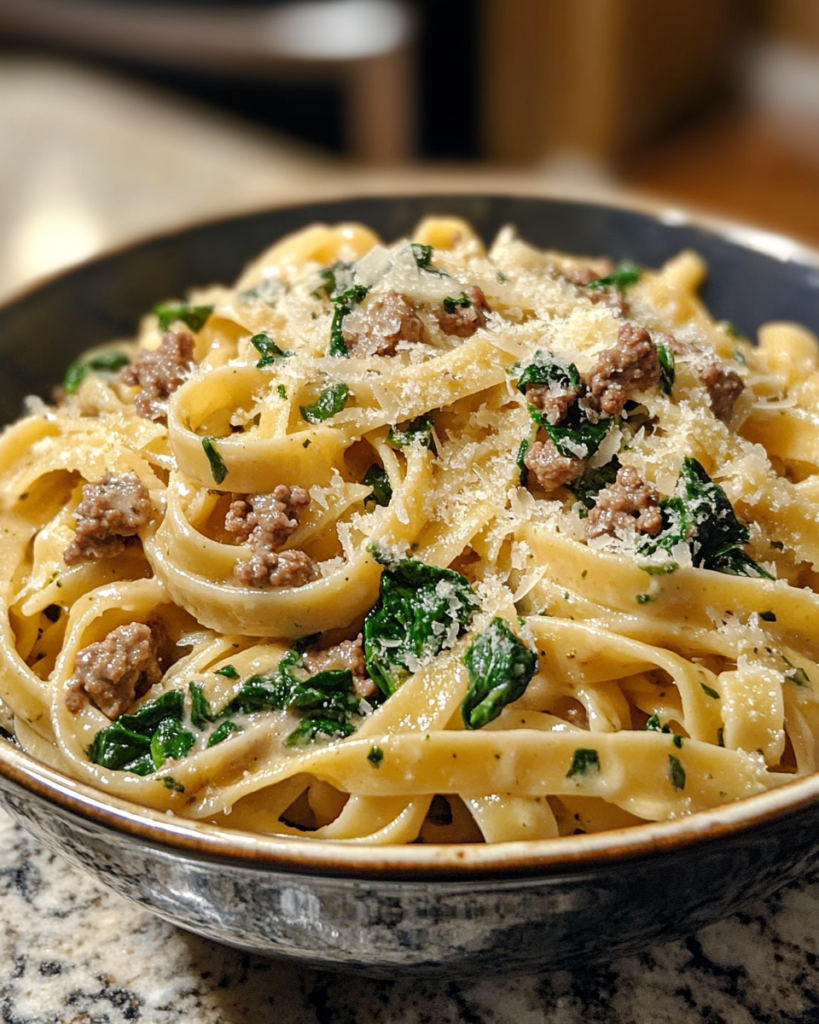
Creamy Spinach Beef Pasta brings together tender pasta, seasoned beef, silky sauce, and fresh spinach in a comforting meal that feels suited to both busy evenings and relaxed family dinners. The rich texture of the sauce coats every bite while the beef adds depth and the spinach keeps the dish balanced and fresh.
This pasta recipe has a familiar, home-cooked character with ingredients that are easy to find and simple to prepare. The cream softens the savory notes of the beef, while garlic, onion, and Parmesan bring layers of flavor without becoming heavy.
A major reason this dish remains popular is its flexibility. Different pasta shapes work well, and small ingredient swaps can fit varying preferences while keeping the creamy texture that defines the dish.
Ingredients Overview
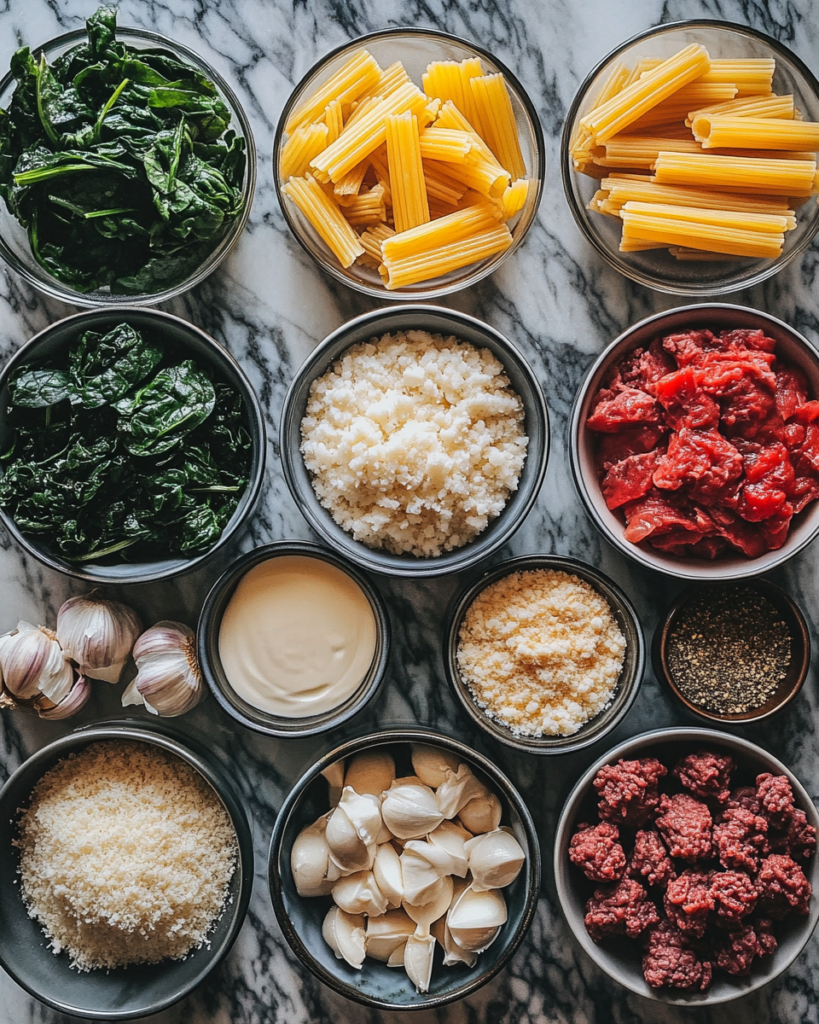
The heart of Creamy Spinach Beef Pasta starts with ground beef. An 85–90% lean blend gives rich flavor while leaving enough fat to carry the sauce. If the beef is extremely lean, the final dish can taste slightly dry. If using a richer blend, draining excess fat keeps the sauce smooth rather than greasy.
Pasta forms the foundation of the meal. Medium shapes such as penne, rigatoni, or rotini hold the creamy sauce inside their curves and grooves. Long noodles also work, though shorter pasta often creates a more balanced bite.
Fresh spinach softens quickly and blends naturally into the cream sauce. Baby spinach is especially suitable because it cooks rapidly and has a mild flavor. Frozen spinach can be substituted after thawing and pressing out extra moisture.
Heavy cream creates the signature texture. Combined with reserved pasta water and Parmesan cheese, it forms a sauce that clings to the noodles rather than pooling at the bottom of the bowl. Half-and-half can be used for a lighter version, though the result becomes slightly thinner.
Garlic and onion provide aromatic depth, while Italian seasoning and black pepper round out the savory profile. Parmesan adds gentle saltiness and a nutty finish.
Together, these ingredients create a meal with creamy richness, savory beef, fresh greens, and comforting pasta in every forkful.
Ingredients
12 ounces penne pasta
1 tablespoon olive oil
1 pound lean ground beef
1 small yellow onion, finely diced
4 garlic cloves, minced
1 teaspoon Italian seasoning
1 teaspoon kosher salt
1/2 teaspoon freshly ground black pepper
1/2 teaspoon paprika
3 cups fresh baby spinach
1 1/2 cups heavy cream
3/4 cup grated Parmesan cheese
1/2 cup reserved pasta water
1 tablespoon unsalted butter
1 tablespoon chopped fresh parsley
Extra Parmesan for serving
Step-by-Step Instructions
Bring a large pot of salted water to a rolling boil. Add the pasta and cook until just al dente according to package timing. Reserve 1/2 cup of pasta water before draining. Set the cooked pasta aside.
Place a large skillet over medium heat and add olive oil. Once warm, add the diced onion. Cook for about 4 minutes until softened and lightly translucent.
Add the minced garlic and stir for about 30 seconds. Garlic cooks quickly, so avoid letting it darken.
Add the ground beef to the skillet. Break it apart with a wooden spoon and cook for 7–9 minutes until browned and no pink remains. Drain excess grease if needed.
Season the beef with Italian seasoning, salt, black pepper, and paprika. Stir thoroughly so the spices coat the meat evenly.
Reduce the heat to medium-low. Add butter and pour in the heavy cream slowly while stirring. Allow the cream to warm gently for 2–3 minutes. Avoid boiling because high heat can cause the sauce to separate.
Add Parmesan cheese in small handfuls while stirring continuously. The cheese should melt into the cream and create a smooth texture.
Add spinach gradually. It may appear bulky at first, but it shrinks rapidly. Stir until wilted, usually about 2 minutes.
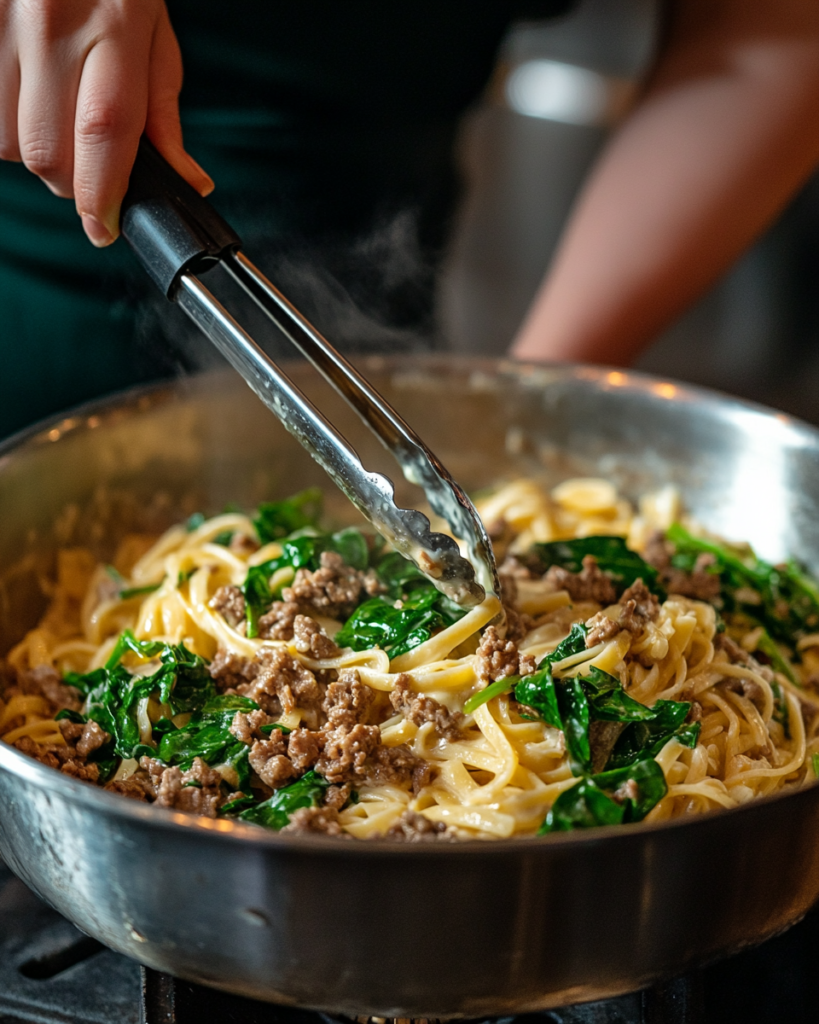
Return the cooked pasta to the skillet and toss thoroughly. Add reserved pasta water a few tablespoons at a time until the sauce reaches a silky consistency.
Cook everything together for another 2 minutes so the pasta absorbs part of the sauce.
Taste and adjust seasoning if necessary.
Scatter chopped parsley across the finished dish and serve immediately with extra Parmesan.
A few common issues can affect the result. Overcooked pasta becomes soft once mixed into the sauce, so stopping at al dente is helpful. Excess heat after adding dairy may create a grainy texture. Too much pasta water can thin the sauce more than intended, so add gradually.
The finished Creamy Spinach Beef Pasta should look glossy, with tender beef distributed throughout and spinach woven into the creamy coating.
Tips, Variations & Substitutions
For deeper flavor, brown the beef thoroughly before adding cream. Small caramelized bits left in the pan contribute extra richness to the sauce.
Ground sirloin, ground turkey, or ground chicken can replace traditional beef. Turkey creates a lighter result while still pairing nicely with spinach and Parmesan.
Different pasta shapes change the eating experience. Rigatoni creates hearty bites, while rotini captures sauce in every twist.
For added vegetables, stir in sliced mushrooms, diced zucchini, or chopped roasted red peppers. Add them during the onion stage so they soften properly.
If heavy cream is unavailable, use half-and-half mixed with a little cream cheese for body.
Freshly grated Parmesan melts more smoothly than pre-shredded cheese.
A pinch of red pepper flakes adds gentle warmth without changing the creamy profile.
For meal prep, store portions in airtight containers for up to three days. Reheat slowly with a splash of milk or water to restore texture.
Gluten-free pasta works well, though cooking times vary.
Serving Ideas & Occasions
Creamy Spinach Beef Pasta works beautifully as a complete dinner, though simple sides can round out the meal.
Serve it with warm garlic bread, toasted sourdough, or a crisp green salad dressed lightly with lemon and olive oil. Roasted broccoli or green beans add color and contrast to the creamy sauce.
For beverages, sparkling water with citrus, iced tea, or a light red wine pair comfortably with the richness of the dish.
This recipe suits weeknight meals because it comes together quickly, yet it also feels suitable for casual gatherings and weekend dinners.
It travels well for shared meals and reheats nicely for lunch the following day. Since it combines protein, vegetables, and pasta in one bowl, it often becomes a dependable family favorite.
Nutritional & Health Notes
Creamy Spinach Beef Pasta offers a balanced combination of carbohydrates, protein, and fat.
Ground beef contributes protein along with iron and vitamin B12. Choosing lean beef lowers excess fat while still giving full flavor.
Spinach adds fiber along with vitamins A and K and contributes freshness that balances the richness of the cream.
Parmesan contributes calcium and savory depth, though sodium levels can rise depending on the amount used.
Portion size plays an important role with cream-based dishes. Pairing the pasta with vegetables or salad creates a balanced meal experience.
For a lighter version, reduce cream slightly and increase spinach volume. Whole wheat pasta can also add extra fiber while maintaining satisfying texture.
FAQs
Can I prepare Creamy Spinach Beef Pasta ahead of time?
Yes. Cook the recipe fully, cool it slightly, and store in sealed containers in the refrigerator for up to three days. The sauce thickens as it sits, which is normal. During reheating, place the pasta in a skillet over low heat and add a small splash of milk, cream, or water while stirring. This helps restore the creamy texture. If preparing in advance for guests, slightly undercook the pasta so it stays pleasant after reheating.
Which pasta shape works best?
Short pasta shapes usually perform very well because they catch both sauce and beef. Penne, rigatoni, and rotini are dependable choices. Shells also work because the sauce gathers inside each piece. Long noodles such as fettuccine create a different style but still pair nicely with creamy sauces. Regardless of shape, avoid overcooking because the pasta continues softening after mixing into the warm sauce.
Can frozen spinach replace fresh spinach?
Frozen spinach works well if prepared properly. Thaw it completely and squeeze out as much liquid as possible before adding it to the skillet. Excess water can thin the sauce and reduce richness. About one cup of thawed spinach generally replaces several cups of fresh leaves. Add frozen spinach after the cream and cheese mixture has started to thicken.
How do I stop the cream sauce from becoming grainy?
Temperature control matters. After browning the beef, lower the heat before adding cream. Add Parmesan gradually rather than all at once. Stir constantly and avoid boiling after dairy enters the pan. Freshly grated cheese melts more smoothly and helps produce a velvety texture. If the sauce thickens too much, reserved pasta water helps bring it back together.
Can I freeze leftovers?
Freezing is possible, though cream sauces can change texture after thawing. Cool the dish fully and store in freezer-safe containers for up to two months. Thaw overnight in the refrigerator before reheating gently on the stove. Stirring in a little cream or milk during reheating can improve consistency. Freshly cooked pasta still gives the smoothest result.
What vegetables pair well with this recipe?
Spinach already adds freshness, but additional vegetables work nicely. Mushrooms bring earthy flavor and blend naturally with beef. Zucchini, roasted peppers, peas, and broccoli also fit the creamy profile. Cook firmer vegetables before adding cream so they become tender without affecting the sauce texture.
How can I add more flavor without changing the recipe too much?
Small adjustments create noticeable changes. Extra garlic, freshly cracked black pepper, chopped parsley, or a little red pepper flake can deepen flavor. A spoonful of cream cheese creates extra richness. Fresh Parmesan added at serving gives a sharper finish. Keeping seasoning balanced allows the beef, spinach, and creamy sauce to remain the center of the dish.