
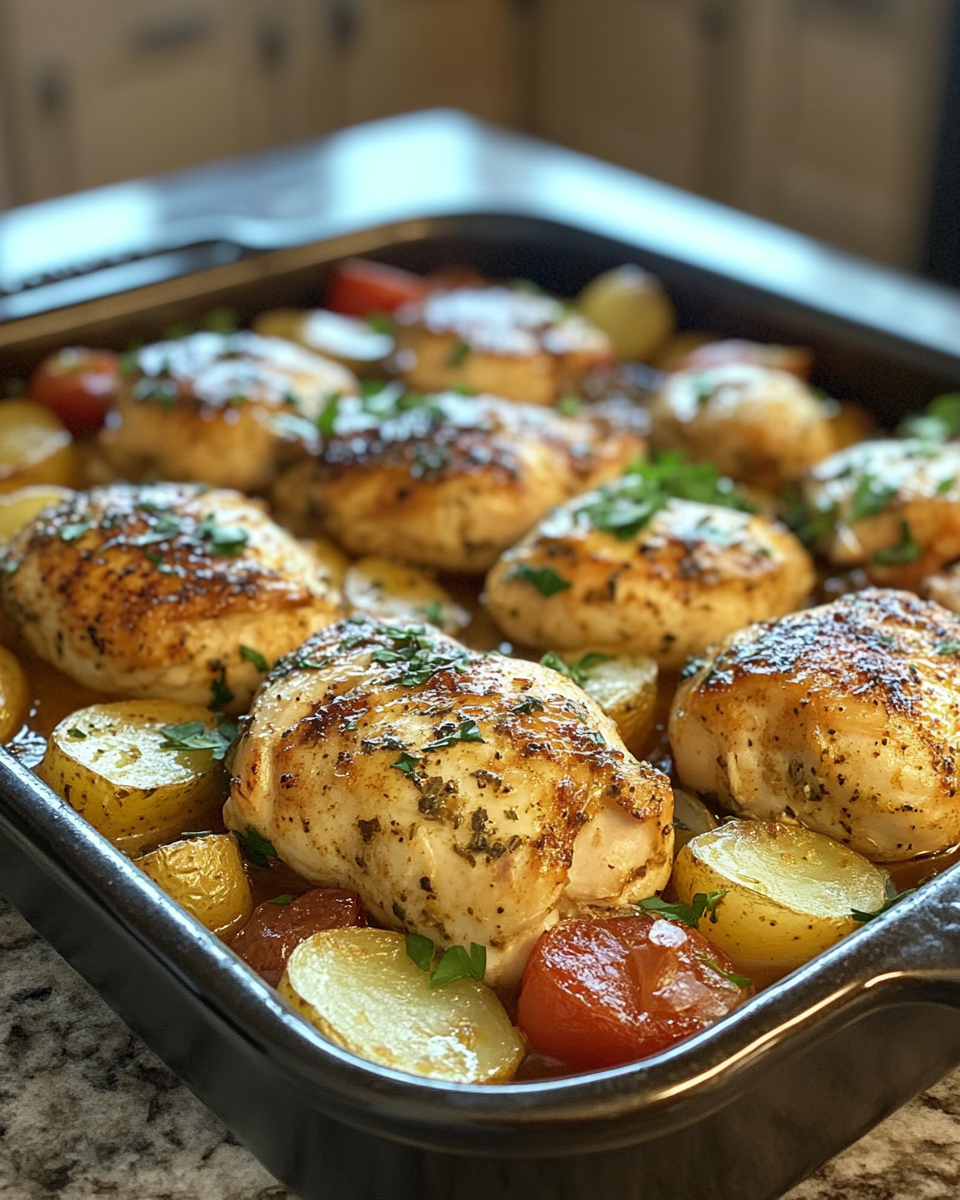
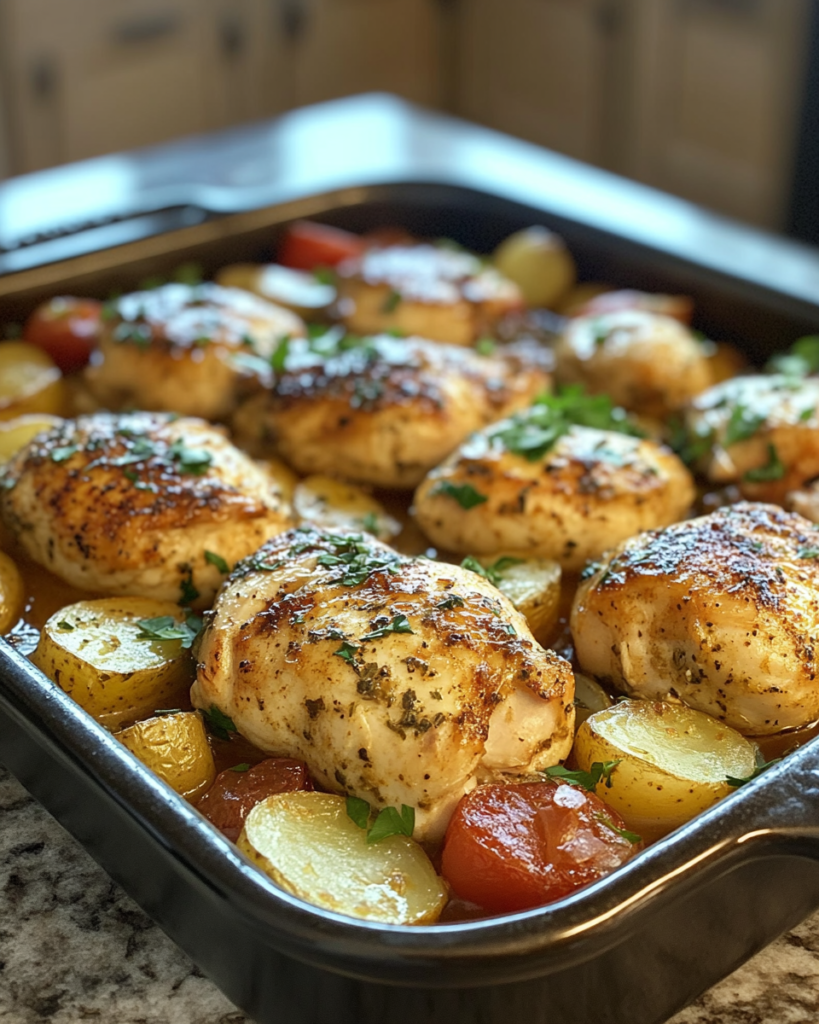
Lemon Herb Chicken With Potatoes is a comforting dinner built around tender chicken, golden potatoes, bright citrus, and fragrant herbs. The combination creates a balanced meal with crisp edges, juicy meat, and a fresh aroma that fills the kitchen while it cooks.
This dish is popular because it uses simple ingredients that work beautifully together. The lemon adds brightness, the herbs add depth, and the potatoes absorb flavorful cooking juices. Everything roasts in the same pan, creating a practical meal that suits both family dinners and relaxed gatherings.
Ingredients Overview
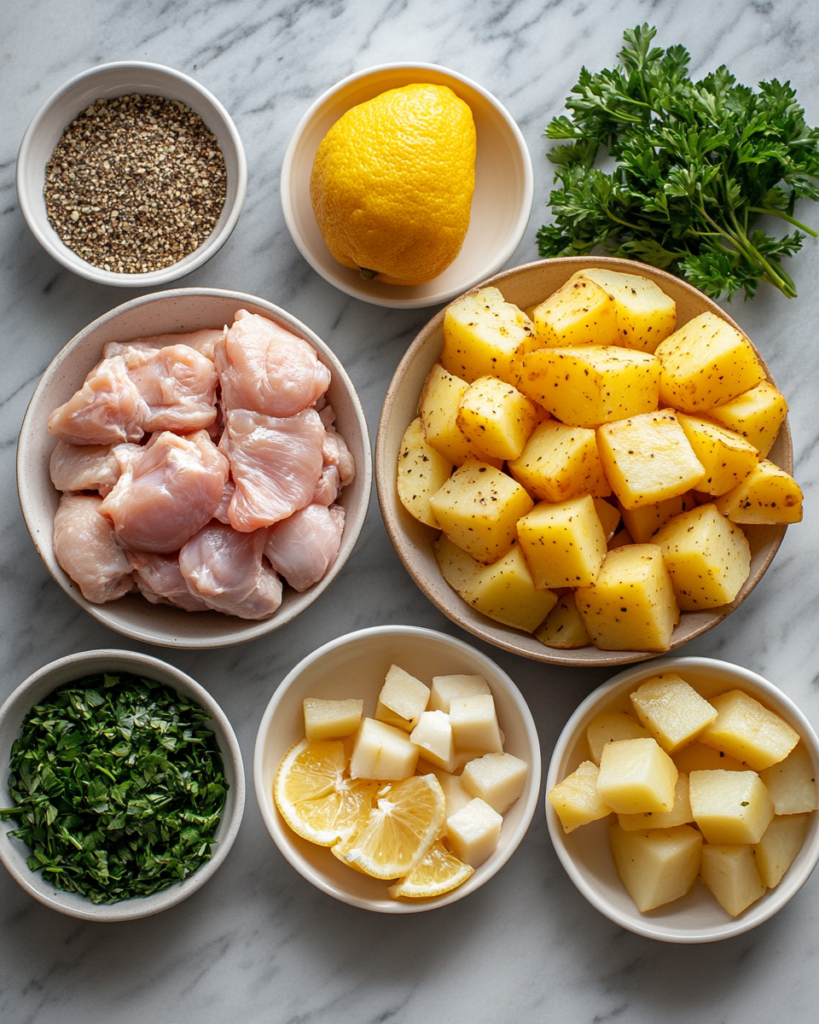
The success of Lemon Herb Chicken With Potatoes comes from a handful of carefully selected ingredients. Chicken forms the centerpiece of the dish and develops rich flavor during roasting. Bone-in, skin-on chicken thighs are especially suitable because they remain tender and juicy throughout cooking, though chicken breasts can also be used with careful timing.
Fresh lemon is one of the most important elements. Its juice brings acidity that balances the richness of the chicken, while the zest contributes concentrated citrus flavor. Together they create a bright profile without overpowering the other ingredients.
Potatoes provide substance and texture. Yukon Gold potatoes are a popular choice because they become creamy inside while developing lightly crisp surfaces. Red potatoes also perform well and hold their shape nicely during roasting.
Garlic adds savory depth that complements both the lemon and herbs. Fresh garlic is preferred because it creates a fuller flavor than powdered alternatives.
Herbs contribute aroma and complexity. Rosemary, thyme, and parsley are classic choices. Rosemary pairs especially well with roasted potatoes, while thyme blends naturally with chicken. Fresh herbs provide the strongest fragrance, though dried herbs remain a practical substitute.
Olive oil coats the ingredients and helps create attractive browning. Salt and black pepper complete the seasoning and bring the flavors into balance.
When combined, these ingredients create a meal that feels hearty yet fresh. Each component supports the others, resulting in a satisfying dish with appealing texture and flavor.
Ingredients
6 bone-in, skin-on chicken thighs
2 pounds Yukon Gold potatoes, cut into chunks
3 tablespoons olive oil
1 large lemon, zested
Juice of 2 lemons
4 cloves garlic, minced
1 tablespoon fresh rosemary, chopped
1 tablespoon fresh thyme leaves
1 teaspoon salt
1/2 teaspoon black pepper
2 tablespoons chopped fresh parsley
Lemon wedges for serving
Step-by-Step Instructions
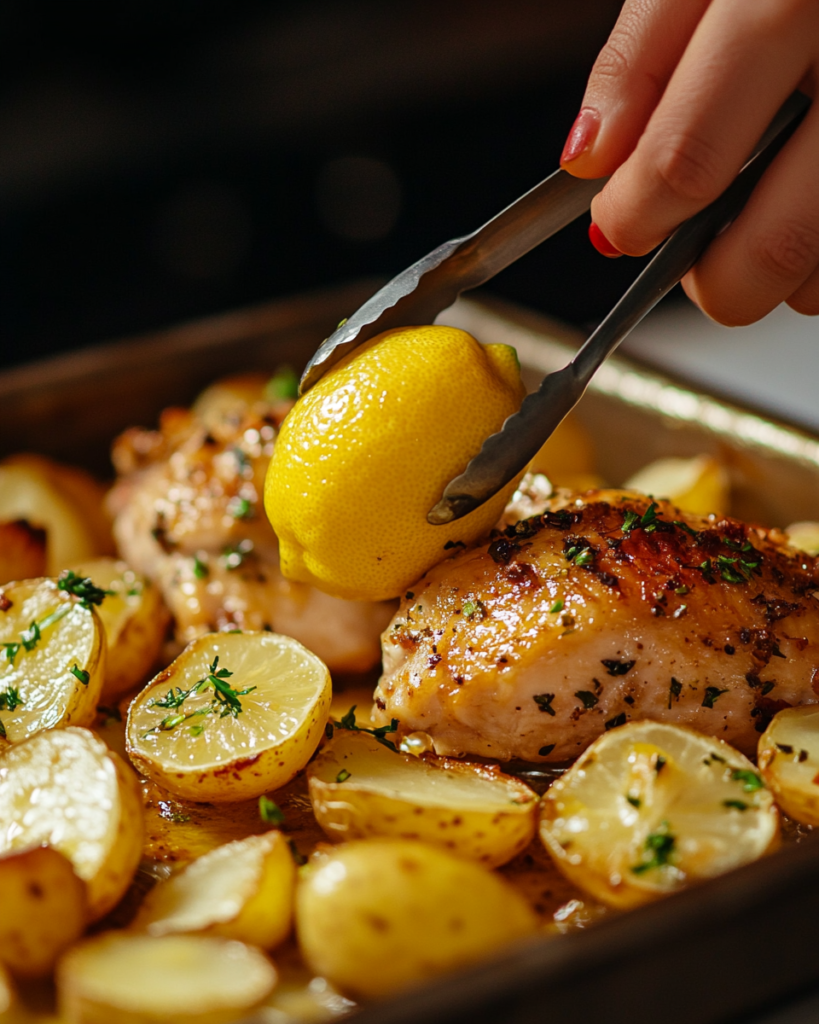
Preheat the oven to 425°F. A hot oven helps the chicken develop crisp skin while encouraging the potatoes to brown properly.
Pat the chicken dry with paper towels. Removing excess moisture promotes better browning and improves texture. Place the chicken in a large bowl.
Add olive oil, lemon zest, lemon juice, garlic, rosemary, thyme, salt, and black pepper. Toss until the chicken is thoroughly coated.
Place the potato chunks in a separate bowl. Add a small portion of the seasoned mixture and toss to coat evenly. The potatoes should have a light coating of oil and herbs.
Arrange the potatoes in a large roasting pan or baking dish. Spread them into an even layer so they roast rather than steam.
Place the chicken pieces on top of and between the potatoes. Position the chicken skin-side up for maximum crispness.
Transfer the pan to the preheated oven. Roast for approximately 40 to 50 minutes. Cooking time may vary depending on the size of the chicken pieces and potato chunks.
Halfway through cooking, carefully stir the potatoes. This helps them brown evenly on multiple sides. Avoid disturbing the chicken skin too much during this process.
The chicken is fully cooked when the thickest portion reaches an internal temperature of 165°F. The skin should appear golden and crisp. The potatoes should be tender when pierced with a fork and lightly browned around the edges.
If additional browning is desired, place the pan under the broiler for 2 to 3 minutes. Watch closely to prevent burning.
Remove the pan from the oven and allow the chicken to rest for about 5 minutes. Resting helps retain moisture within the meat.
Sprinkle fresh parsley over the entire dish before serving. Add fresh lemon wedges alongside the chicken and potatoes.
One common mistake is overcrowding the pan. Too many ingredients packed together create steam, which limits browning. Another frequent issue is cutting potato pieces into different sizes. Uniform pieces cook more evenly and improve the final texture.
Serve immediately while the potatoes remain crisp and the chicken is warm and juicy.
Tips, Variations & Substitutions
Chicken drumsticks, bone-in breasts, or a combination of cuts can replace chicken thighs. Adjust cooking time as necessary based on the selected cut.
Sweet potatoes may be substituted for traditional potatoes. They create a slightly sweeter flavor profile while still pairing nicely with lemon and herbs.
Fresh herbs generally provide the most pronounced aroma. If using dried herbs, reduce the quantity because dried varieties are more concentrated.
For additional vegetables, add carrots, onions, or Brussels sprouts during roasting. These vegetables absorb the flavorful juices and blend naturally with the rest of the meal.
A small amount of Dijon mustard mixed into the marinade creates extra depth without changing the overall character of the dish.
If preparing the recipe ahead of time, marinate the chicken for several hours in the refrigerator. This allows the lemon and herbs to penetrate the meat more thoroughly.
When reheating leftovers, use the oven instead of the microwave whenever possible. Oven reheating helps preserve the texture of both the chicken skin and potatoes.
Serving Ideas & Occasions
Lemon Herb Chicken With Potatoes is suitable for a wide variety of occasions. It works beautifully as a weeknight family dinner because everything cooks together in a single pan.
For a larger gathering, pair it with a crisp green salad, roasted vegetables, or steamed green beans. The fresh flavors of these sides complement the citrus and herbs without competing with them.
Warm dinner rolls or crusty bread are excellent additions for soaking up the flavorful juices left in the pan.
For beverages, sparkling water with lemon, iced tea, or light fruit-based drinks pair nicely with the bright character of the meal.
The dish is equally appropriate for casual weekend meals, holiday gatherings, or meal preparation for the week ahead. Its balance of simplicity and flavor makes it a dependable choice throughout the year.
Nutritional & Health Notes
This recipe provides a balanced combination of protein, carbohydrates, and fats. Chicken contributes high-quality protein that helps create a satisfying meal.
Potatoes provide carbohydrates that serve as a primary energy source. They also contain potassium and other nutrients naturally present in vegetables.
Lemon contributes flavor without adding significant calories. Its acidity brightens the dish and reduces the need for heavy sauces.
Olive oil supplies beneficial unsaturated fats while helping the ingredients roast properly. Using a moderate amount supports flavor and texture without excessive richness.
Fresh herbs contribute aroma and small amounts of vitamins and plant compounds. Although used in modest quantities, they add complexity without increasing calories substantially.
Portions can be adjusted according to individual preferences and dietary goals. Pairing the meal with additional vegetables can increase volume and variety while maintaining balance.
FAQs
Can I use boneless chicken?
Yes. Boneless chicken thighs or breasts work well in this recipe. Because boneless cuts cook faster than bone-in pieces, begin checking for doneness earlier. The internal temperature should still reach 165°F. Boneless chicken may not release as many flavorful juices into the pan, but the lemon, herbs, and garlic continue to provide excellent flavor. Monitor the meat carefully to avoid overcooking.
Which potatoes work best?
Yukon Gold potatoes are often preferred because they create a creamy interior and attractive golden exterior. Red potatoes are another excellent option because they hold their shape during roasting. Russet potatoes can also be used, though they tend to become softer and more delicate. Regardless of variety, cut the potatoes into similar-sized pieces for even cooking.
Can I prepare it ahead?
Yes. The chicken can be marinated several hours ahead or overnight in the refrigerator. The potatoes may also be cut and stored in cold water until needed. When ready to cook, drain and dry the potatoes thoroughly before seasoning. Preparing components ahead reduces work during busy evenings and helps streamline dinner preparation.
How do I store leftovers?
Allow the chicken and potatoes to cool before transferring them to airtight containers. Store them in the refrigerator for up to four days. Reheat in a 350°F oven until warmed through. This method helps preserve texture more effectively than microwave reheating. Fresh parsley and lemon wedges should be added after reheating rather than during storage.
Can I freeze this dish?
Yes. Cooked chicken freezes very well, and potatoes can also be frozen, though their texture may soften slightly after thawing. Store portions in freezer-safe containers for up to three months. Thaw overnight in the refrigerator before reheating. Oven reheating generally produces the best results for texture and flavor.
What herbs pair well with lemon chicken?
Rosemary, thyme, parsley, oregano, and marjoram all pair beautifully with lemon. Rosemary contributes a woodsy aroma, while thyme adds gentle earthiness. Parsley provides freshness and color. Combining two or three herbs often creates a balanced flavor profile that complements both the chicken and potatoes.
How can I make the potatoes crispier?
Avoid overcrowding the pan and use a sufficiently high oven temperature. Spread the potatoes into a single layer whenever possible. Stir them once during roasting to expose additional surfaces to direct heat. A light coating of olive oil also promotes browning. For extra crispness, place the pan under the broiler briefly at the end of cooking while monitoring closely.
………………..