
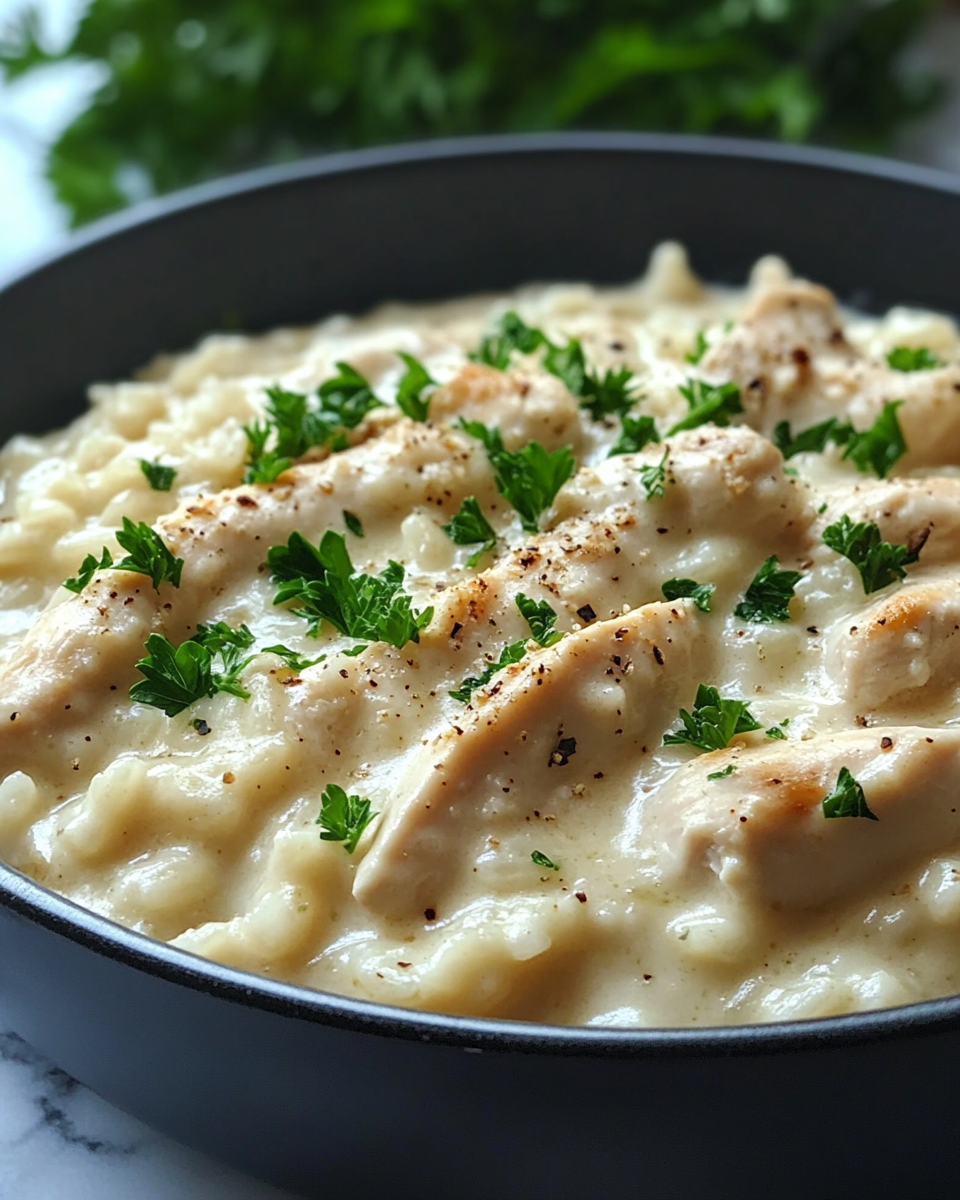
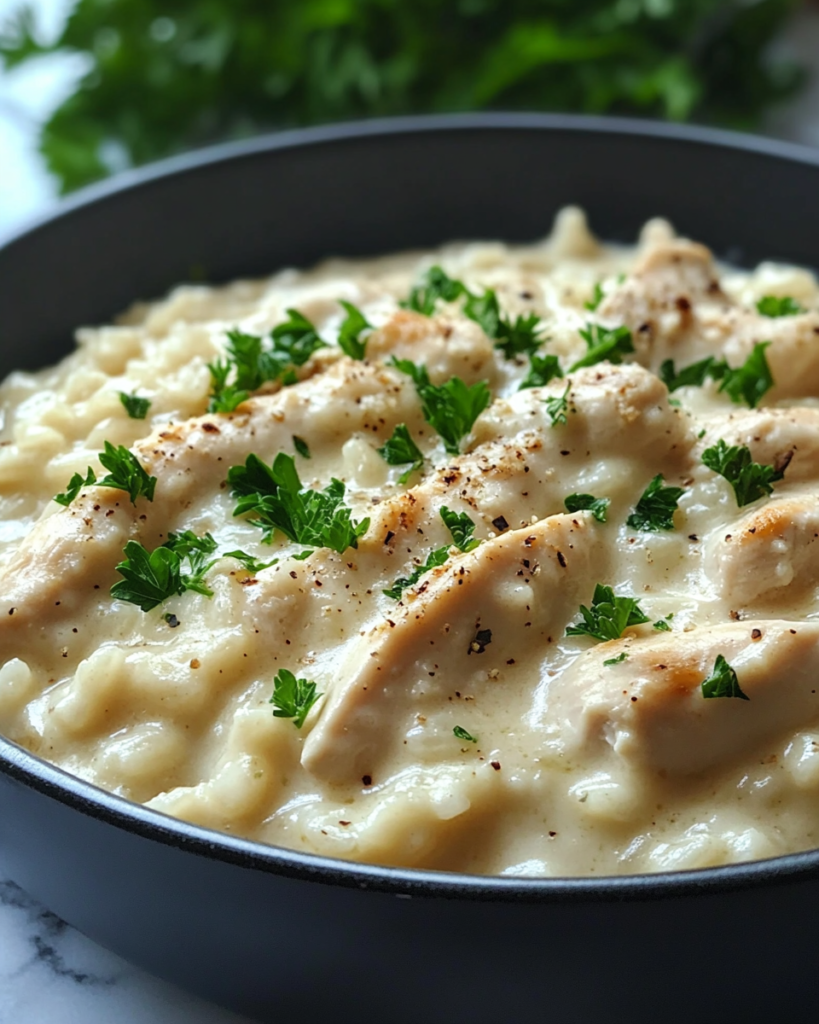
Creamy Garlic Chicken Rice Skillet is the kind of dinner that brings comfort to the table with minimal fuss. Tender chicken, fluffy rice, garlic, and a rich creamy sauce come together in a single pan, creating a meal that feels satisfying and practical at the same time.
This recipe is ideal for busy evenings because everything cooks in one skillet. The rice absorbs the savory flavors from the chicken and broth while the creamy sauce coats every bite. The result is a balanced dish with hearty texture and plenty of flavor.
A one-pan meal also means fewer dishes to wash, making it a favorite for families and home cooks who appreciate simple preparation without sacrificing taste.
Ingredients Overview
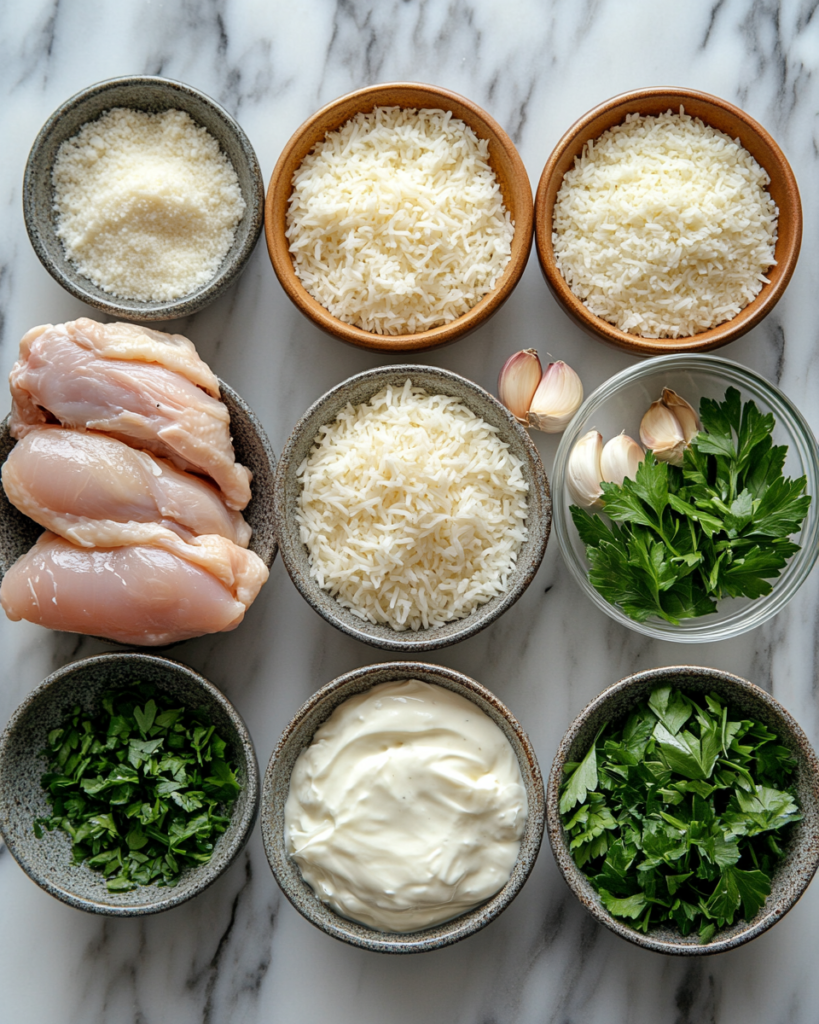
The success of Creamy Garlic Chicken Rice Skillet comes from a handful of pantry-friendly ingredients that work together beautifully.
Chicken serves as the main source of protein. Boneless, skinless chicken breasts are commonly used because they cook quickly and remain tender when simmered gently. Chicken thighs are another excellent choice and offer a slightly richer flavor.
Garlic plays a central role in the recipe. Fresh garlic provides an aromatic base that infuses both the rice and sauce. As it cooks, the sharpness softens into a mellow, savory flavor that complements the creamy ingredients.
Long-grain white rice is a dependable choice because it cooks evenly and absorbs liquid without becoming overly sticky. The rice acts as a sponge for the broth and seasonings, helping distribute flavor throughout the dish.
Chicken broth contributes depth and richness. Using broth instead of water adds savory character and helps create a fuller flavor profile.
Heavy cream and Parmesan cheese create the creamy texture that makes this skillet meal so appealing. The cream adds body while the cheese contributes a subtle nutty note that blends naturally with the garlic.
A small amount of butter and olive oil helps brown the chicken and sauté the aromatics. Seasonings such as salt, pepper, onion powder, and Italian seasoning round out the flavor without overwhelming the main ingredients.
For substitutions, brown rice can be used, though it requires additional liquid and cooking time. Half-and-half may replace heavy cream for a lighter sauce. Fresh spinach, mushrooms, or peas can also be added for extra vegetables.
Ingredients
1 1/2 pounds boneless skinless chicken breasts, cut into bite-sized pieces
1 tablespoon olive oil
1 tablespoon butter
1 teaspoon salt
1/2 teaspoon black pepper
1 teaspoon onion powder
1 teaspoon Italian seasoning
5 cloves garlic, minced
1 cup long-grain white rice
2 1/2 cups chicken broth
3/4 cup heavy cream
1/2 cup grated Parmesan cheese
2 tablespoons chopped fresh parsley
Optional garnish:
Extra Parmesan cheese
Fresh parsley
Step-by-Step Instructions
Pat the chicken pieces dry with paper towels. Dry chicken browns more effectively and develops richer flavor during cooking. Season the chicken with salt, pepper, onion powder, and Italian seasoning.
Place a large skillet with a lid over medium-high heat. Add the olive oil and butter. Once the butter has melted and begins to foam slightly, add the chicken in a single layer.
Cook the chicken for about 5 to 6 minutes, stirring occasionally. The pieces should develop light golden color on the outside. They do not need to be fully cooked at this stage because they will continue cooking later with the rice.
Add the minced garlic and cook for about 30 seconds. Stir continuously so the garlic becomes fragrant without browning too much. Burned garlic can introduce bitterness into the finished dish.
Add the uncooked rice directly to the skillet. Stir for 1 to 2 minutes so the grains become lightly coated with the cooking fat and seasonings. This brief step helps build flavor throughout the rice.
Pour in the chicken broth and stir thoroughly, scraping any flavorful browned bits from the bottom of the skillet. Bring the mixture to a gentle boil.
Reduce the heat to low and cover the skillet with a tight-fitting lid. Allow the rice and chicken to simmer for 18 to 20 minutes. Avoid lifting the lid frequently, as trapped steam is essential for properly cooked rice.
After the cooking time has passed, check the rice. Most of the liquid should be absorbed and the rice should be tender. If the rice still feels firm, add a few tablespoons of broth and continue cooking for several more minutes.
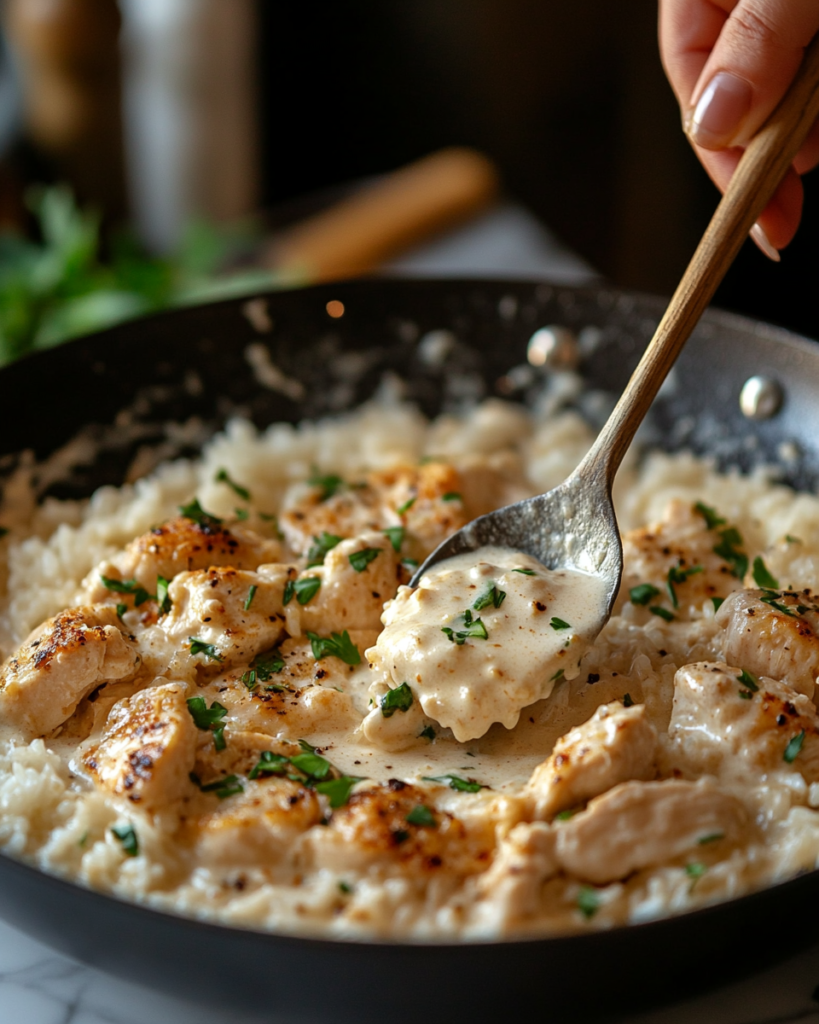
Once the rice is cooked, lower the heat and stir in the heavy cream. Mix gently until fully incorporated. Add the Parmesan cheese and continue stirring until the sauce becomes smooth and creamy.
Allow the skillet to cook uncovered for 2 to 3 minutes. During this time, the sauce will thicken slightly and coat the rice evenly.
Taste and adjust seasoning if needed. Stir in the chopped parsley just before serving.
A common mistake is using heat that is too high while the rice cooks. Excessive heat can cause the liquid to evaporate too quickly before the rice becomes tender. Another frequent issue is adding the cream too early, which may affect the texture of the sauce. Waiting until the rice is fully cooked produces the best result.
Serve immediately while warm and creamy.
Tips, Variations & Substitutions
Chicken thighs can replace chicken breasts if a richer flavor is preferred. They remain tender during cooking and pair beautifully with the garlic cream sauce.
Vegetables can be incorporated easily. Spinach, peas, broccoli florets, mushrooms, or diced zucchini blend naturally into the skillet. Add quick-cooking vegetables near the end of cooking to preserve their texture.
For additional savory depth, stir in a small amount of shredded mozzarella along with the Parmesan. The cheese melts smoothly into the sauce and creates extra richness.
Brown rice is a suitable substitute for white rice, although it requires additional cooking time and more liquid. Be prepared to adjust the simmering period accordingly.
For a lighter version, use half-and-half instead of heavy cream. The sauce will be slightly less rich while still maintaining a pleasant creamy consistency.
If preparing meals in advance, store portions in airtight containers. A splash of broth or milk during reheating helps restore the creamy texture.
Fresh herbs such as basil, chives, or thyme can provide subtle flavor changes. These additions work particularly well during spring and summer when fresh herbs are plentiful.
Serving Ideas & Occasions
Creamy Garlic Chicken Rice Skillet is substantial enough to serve as a complete meal on its own, but several side dishes pair nicely with it.
A crisp green salad with a light vinaigrette offers contrast to the creamy sauce. Steamed green beans, roasted asparagus, or sautéed broccoli also complement the dish without competing with its flavors.
Warm dinner rolls or crusty bread are useful for soaking up any extra sauce left in the skillet.
This recipe works well for weeknight dinners, casual family gatherings, meal preparation sessions, and relaxed weekend meals. Its one-pan preparation makes it especially practical when time is limited.
For larger gatherings, the recipe can be doubled in a large skillet or Dutch oven. Because it remains satisfying and approachable, it appeals to both adults and children.
Nutritional & Health Notes
Creamy Garlic Chicken Rice Skillet provides a balanced combination of protein, carbohydrates, and fat. The chicken contributes substantial protein, helping create a filling meal.
Rice supplies carbohydrates that provide energy and help make the dish satisfying. The creamy sauce contributes richness and flavor while also adding calories and fat.
Parmesan cheese adds calcium and additional protein. Garlic contributes flavor without adding significant calories, making it an effective ingredient for building depth in the dish.
Including vegetables such as spinach, peas, or broccoli can increase the fiber, vitamin, and mineral content of the meal.
Portion control can easily be adjusted according to individual needs. Pairing the skillet with vegetable-based side dishes can help create a well-rounded dinner that includes a broader range of nutrients.
Can I use pre-cooked chicken for this recipe?
Yes. Pre-cooked chicken is a convenient option when you want to reduce preparation time. Rotisserie chicken works particularly well because it already has a savory flavor. Prepare the rice and broth mixture according to the recipe, then stir in shredded cooked chicken during the final few minutes of cooking. This allows the chicken to warm through without becoming dry. Since pre-cooked chicken may already contain salt, taste the dish before adding additional seasoning. Using cooked chicken is a practical way to turn leftovers into a complete meal while still achieving the creamy texture and garlic flavor that define this skillet recipe.
What type of rice works best?
Long-grain white rice is generally the most dependable choice because it cooks evenly and absorbs liquid efficiently. Jasmine rice is another excellent option and provides a slightly fragrant aroma. Basmati rice may also be used, though the texture will be somewhat lighter. Brown rice can work, but it requires additional broth and a longer cooking time. Instant rice is not recommended because it cooks too quickly and can become overly soft when simmered with the sauce ingredients. Selecting a rice variety that maintains structure helps create the ideal balance between creamy sauce and tender grains.
Can I prepare Creamy Garlic Chicken Rice Skillet ahead of time?
Yes. This dish stores well and can be prepared in advance for meal planning purposes. Allow the skillet to cool before transferring portions to airtight containers. Refrigerate for up to four days. During storage, the rice will continue absorbing some moisture from the sauce. When reheating, add a small splash of chicken broth, milk, or cream to restore the original consistency. Warm gently on the stovetop or in the microwave, stirring occasionally. The flavors often become even more developed after resting overnight, making leftovers particularly enjoyable for lunch or dinner.
How do I prevent the rice from becoming mushy?
The key is maintaining the correct ratio of liquid to rice and avoiding excessive stirring during the simmering process. Once the broth is added and the mixture reaches a simmer, cover the skillet and allow the rice to cook undisturbed. Frequent stirring can release starch and create a softer texture than desired. Measuring ingredients carefully is also important. Too much liquid may produce overly soft rice, while too little liquid can leave the grains undercooked. Allowing the rice to rest for several minutes after cooking helps the remaining moisture distribute evenly throughout the skillet.
Can I freeze leftovers?
Yes, although the texture may change slightly after thawing because of the dairy ingredients. Allow the dish to cool completely before placing it in freezer-safe containers. Freeze for up to three months. Thaw overnight in the refrigerator before reheating. Warm gently and add a small amount of broth, milk, or cream to help restore the sauce. Stir frequently during reheating to encourage a smooth consistency. While freshly prepared Creamy Garlic Chicken Rice Skillet offers the best texture, frozen leftovers can still provide a satisfying meal when reheated properly.
What vegetables pair well with this dish?
Many vegetables complement the creamy garlic flavor. Fresh spinach is a popular addition because it wilts quickly and blends naturally into the sauce. Peas contribute a touch of sweetness and pleasant color. Mushrooms add earthy flavor and pair especially well with Parmesan cheese. Broccoli florets, asparagus pieces, and zucchini are also suitable options. Vegetables can be mixed directly into the skillet or served on the side. Choosing vegetables with contrasting textures helps create a more balanced meal while adding variety and nutritional value.
How can I add more flavor without making the dish spicy?
Several ingredients can deepen the flavor profile while keeping the recipe mild. Additional Parmesan cheese contributes savory richness. Fresh herbs such as parsley, basil, thyme, or chives provide freshness and aroma. A small amount of lemon zest can brighten the sauce and complement the garlic. Sautéed mushrooms also introduce extra depth. Using a rich chicken broth rather than water makes a noticeable difference as well. These additions allow the dish to develop more complexity while maintaining the creamy, comforting character that makes it appealing to a wide range of tastes.
………………..